#1 - The same question, two rooms
The first issue of my weekly newsletter - welcome!


Right now, a quiet shift is happening simultaneously across your kitchen table and the corporate boardroom: we’ve started outsourcing our curiosity to AI. From kids using LLMs to breeze through essays to managers automating daily deliverables, we are offloading the friction of thinking - and whether we're looking at a child’s notebook or a company’s operational workflow, the core question is exactly the same:
When does a helpful shortcut become a cognitive crutch?
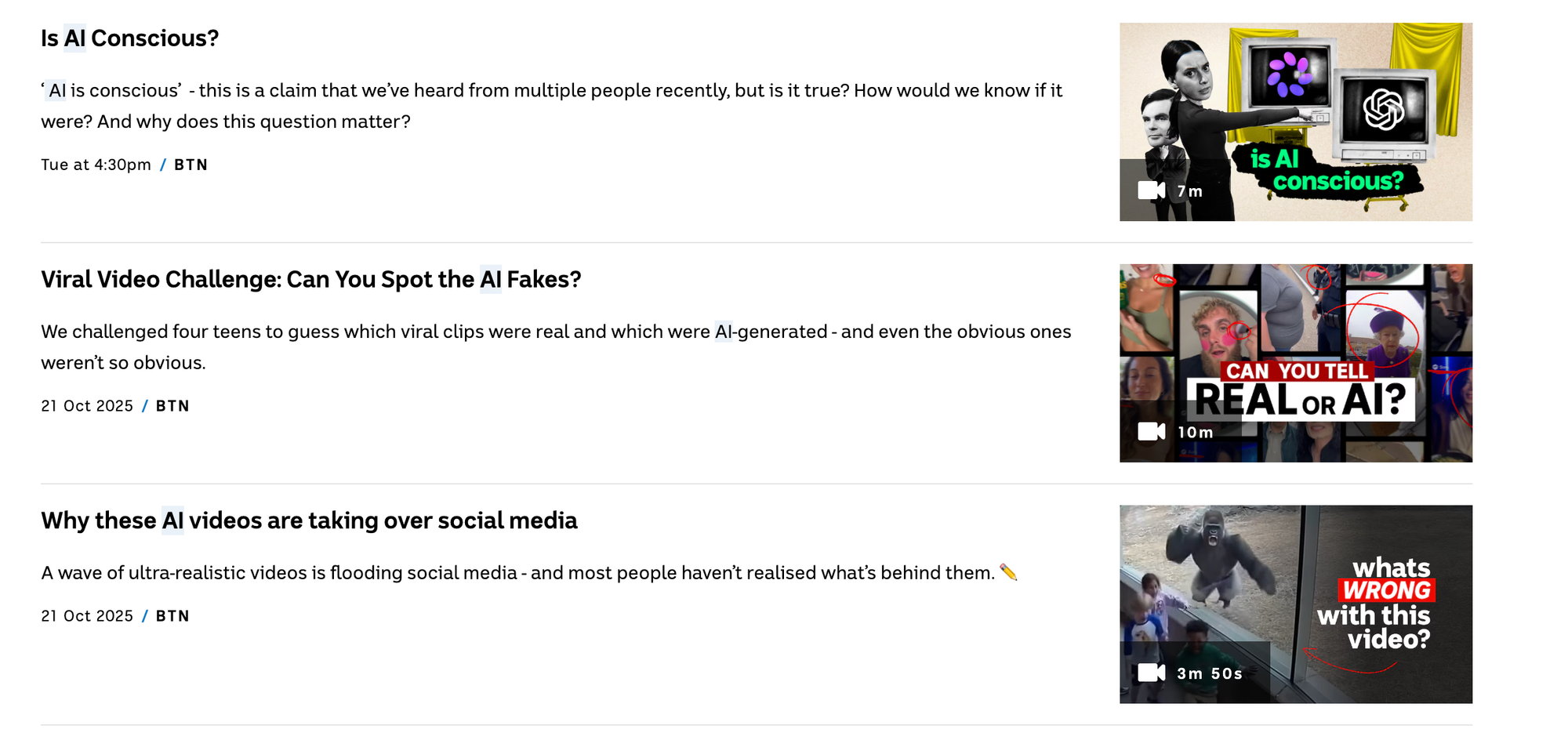
The fix won’t be found in rigid compliance policies or strict household bans. Adults in my family work with AI daily - and we are teaching our kid to use AI, too. It takes a culture of open conversation. I love watching Behind the News with my kid in the mornings and really appreciate how often the discuss AI-related topics in age-appropriate manner:
The teams and families that thrive won't be the ones blindly adopting every new tool or banning them out of fear. It will be the ones who stay curious and prioritise understanding over efficiency.
I deliberately bring AI governance and intentional education and parenting together here because they share the exact same challenge:
How do we preserve human agency in an automated world?
As leaders, parents, and educators, we are managing the same underlying risks: information gaps, algorithmic bias, and cognitive dependency. Real governance isn't a dry compliance checklist - it’s a daily disposition, an attitude, a habit of mind, a way of looking at the world. It is the understanding that every time we interact with technology, we are making a micro-choice about human agency. It's an ongoing commitment to staying awake at the wheel, constantly observing how tools are altering the way your team works - or how your children learn.
This newsletter is a space for anyone ready to lead these conversations, both at work and at home.
I’m glad you’re here for the journey.
State of AI: 22-31 May 2026
Sam Altman's recommendation for organisations adopting AI: agility over rigid policies.
The most successful organisations, he says, take an agile, experimental approach [01:32]. They allow small groups within the company to adopt the technology for specific use cases, which quickly reveals what works, what presents real problems, and what challenges exist regarding user adoption [01:38]. From there, they iterate and adapt dynamically.
For the agile leader (at work and at home): 3 steps start prototyping
If you are a founder, department head, or operational leader looking to integrate AI without getting bogged down in corporate inertia, these three action items will get your team moving:
- 1. Isolate 1–2 "micro-pilots":
Stop trying to overhaul your entire operations setup at once. Instead, pick two specific, low-risk, and highly repetitive workflows to test first—such as drafting internal team updates, synthesizing qualitative customer feedback trends, or structuring initial marketing copy.
- Instead of "using AI for marketing," isolate the weekly newsletter draft or the first pass of individual client progress summaries.
- Instead of "using AI for support," pick the task of categorising and summarising a batch of 50 raw customer feedback forms from the past month into a bulleted list of core complaints and wins.
It works for families and educators, too: choose 1-2 routines (again - highly specific and low-risk), and use AI as a helpful sparring partner rather than a replacement for effort.
- Instead of "using AI for schoolwork", try using an LLM as a brainstorming buddy for the first 10 minutes of a creative project
- If your child is studying ancient history, don't use AI to write a summary. Instead, run a micro-pilot where the child interviews an LLM acting as a historical figure (like a Roman centurion or an Egyptian architect) to gather facts.
- Use AI to generate a customized math word puzzle based on their current favorite hobby (like Lego or Minecraft) to make practice more engaging.
- 2. Deploy a 2-week "task force"
Don't force a company-wide mandate. Hand the keys to 2-3 team members who are already naturally tech-curious and enthusiastic about automation. Task them with actively testing AI tools within those chosen micro-pilots for a strict, 2-week sprint to see what actually works.
- Ask your operations coordinator and a content writer to form a temporary duo. For exactly 2 weeks, their goal is to see if an LLM can cut the time it takes to build the weekly newsletter template from 4 hours down to 1. They are given free rein to try different tools, but at the end of the 14 days, they must present a live "before and after" workflow to show if it actually saved time.
What can we do for schoolwork?
- Try a tool for 2 week, then sit down together with the child for a 10-minute reflection. Ask the honest questions:
- Did this help us get past the blank-page anxiety, or did it just make us lazy?
- Was it fun, or did it feel like a distraction?
- If it worked, keep it. If it didn't, drop it without guilt. Try something else!
- 3. Establish "guardrails", not "gates"
Instead of a complex rulebook, give your task force ultimate freedom bounded by just 2 non-negotiable boundaries:
- never input sensitive client, financial or other confidential data - only use dummy (e.g. AI-generated) data
- always ensure a human reviews and owns the final output before it goes live
Leave everything else open for creative exploration.
How to adapt it with kids?
If you build a gate (e.g., locking down every device with complex passwords, banning AI tools entirely, or requiring your explicit permission before they can open a browser tab), you create friction. Children will either lose curiosity or (more likely) learn to bypass the gate secretly on other devices. Instead, build guardrails that define the absolute boundaries of safety, then let them explore within that lane.
- Hand your child a physical card for their desk with these exact household guardrails:
- Sandbox boundary: “We only use AI tools together at the main table during dedicated learning hours, using our private family account where data sharing is turned off. We never type in our real family names (or any other real people's names!), addresses, or any personal details.”
- Human-first boundary: “The AI can only be used to talk, brainstorm, or generate practice questions. No AI text ever goes into your physical notebook. Your writing, drawing, and final answers must always come entirely from your own mind and your own hand.”
Off-duty
In a world of infinite AI content, the humanities are a survival skill (check out the podcast recommendation below for more on this). Here is what is keeping me grounded this week:
📚 What I am Reading
My Dark Vanessa - Kate Elizabeth Russell
It is a #metoo book but with an unexpected twist, a psychological thriller I could not put it down, also available as an audiobook beautifully narrated by a professional actress. It is also so much more that a #metoo book, with many lessons for parents, especially considering the risks of the digital age we are parenting in.
My review:
 Katya Kamlovskaya
My review of My Dark Vanessa by Kate Elizabeth Russell
🎬 What I am Watching
Project Hail Mary - 2026, IMDB 8.6
Project Hail Mary official trailer
We read the book first, our whole family, and we loved it. The movie adaptation is great - even though a lot of deep science detailed had been omitted, it is still very impressive and raises many important questions, for adults and kids alike.
- How do we find common ground with people who seem completely different from us?
- If we found out tomorrow that an alien species existed, how should humans react? Should we be scared, or should we be ready to build a "Safe Sandbox" to work together?
- Is it okay to be scared? Why is action is what counts when you are scared?
And - relevant for AI governance, too:
Is it ever okay to do something "bad" or unfair if it helps a huge number of people?
🎵 What I am Listening To
A friend recommended me a new podcast - Wild by Sarah Wilson, and I immediately subscribed as it seems to be full of interesting conversations.
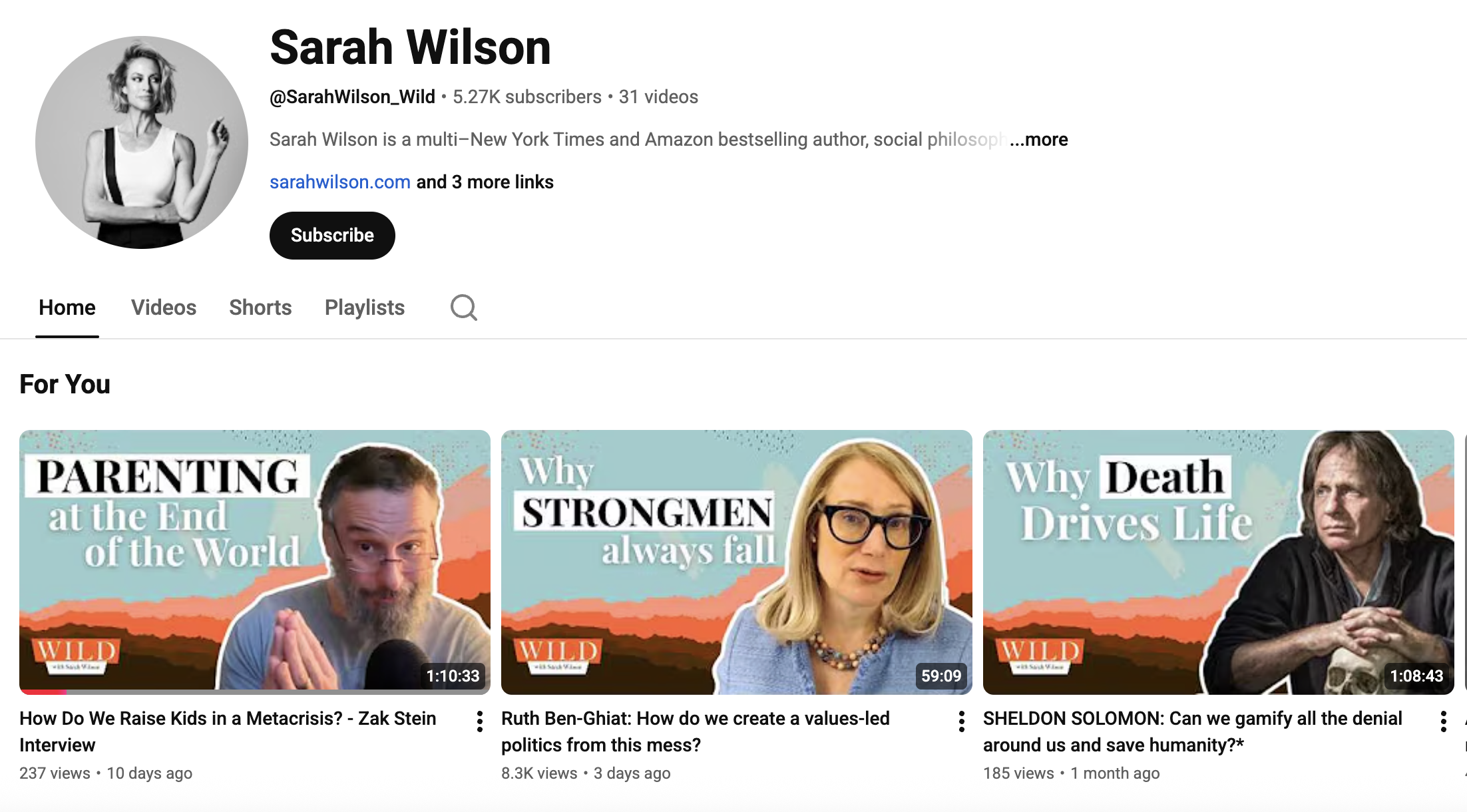
The episode I listened to and reviewed in my recent post is about parenting in the metacrisis. It offers a perspective on what we should be teaching our kids to prepare them for the uncertain future in the world where the existing systems and structures are simply not keeping up with the development of technologies in general and AI in particular. I think it answers many questions parents and educators are asking themselves and each other these days.
Here is my detailed review:
 Katya Kamlovskaya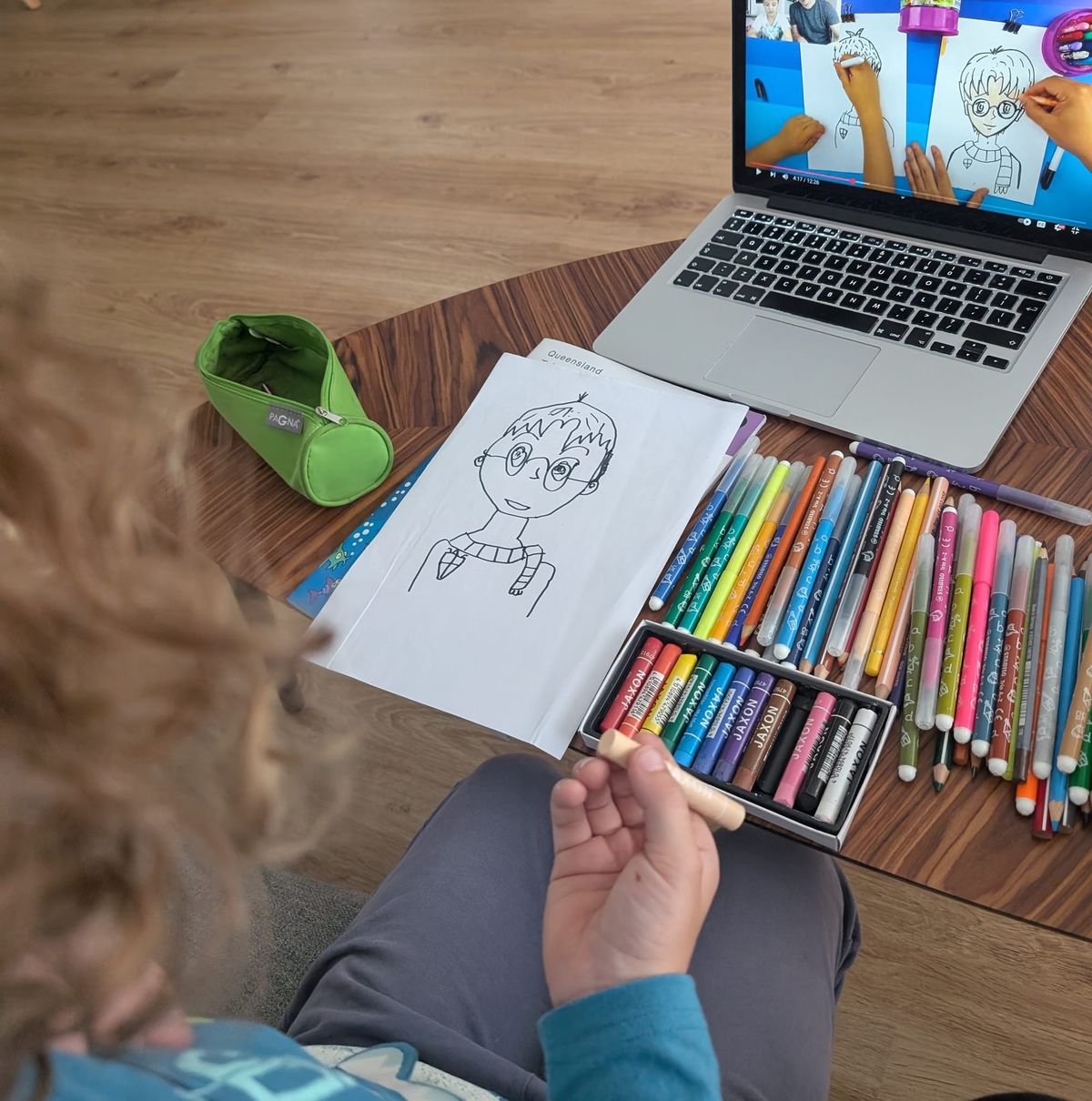
As Zac argues, in a world of infinite AI content, the humanities are a survival skill. Here is what is keeping me grounded this week:
Sign of the Times - Harry Styles (2017)
Sign of the Time - Harry Styles
This song was featured in the Project Hail Mary movie, and I recently sang it with a band at a local open mic. When I am preparing to sign a song I read discussions about the meaning of the lyrics, different interpretations, disassemble the text into lines and learn to feel every word - making a song my own is the only way I can connect with the audience when singing. We were surprised to discover that Sign of the Times was, quite unexpectedly, about a difficult birth that results in the death of the mother, written from the perspective of the mother. A beautiful, powerful song.
Thank you for being here for issue one.
This newsletter will land in your inbox every week unless you choose to unsubscribe - and it will always be trying to be useful rather than just interesting.
Replies go directly to me. I read all of them, and reader questions and comments will shape future issues.
This week's question - I'd love to hear your answer:
What's the AI conversation you keep meaning to have - with your child, your team, your family, or yourself - but haven't quite got round to yet?
Stay curious,
Katya