Parenting in the metacrisis
This post is a review of the podcast episode in which Zak Stein, just like Sir Ken Robinson, argues that our current education institutions are failing because they were designed for a world that no longer exists.

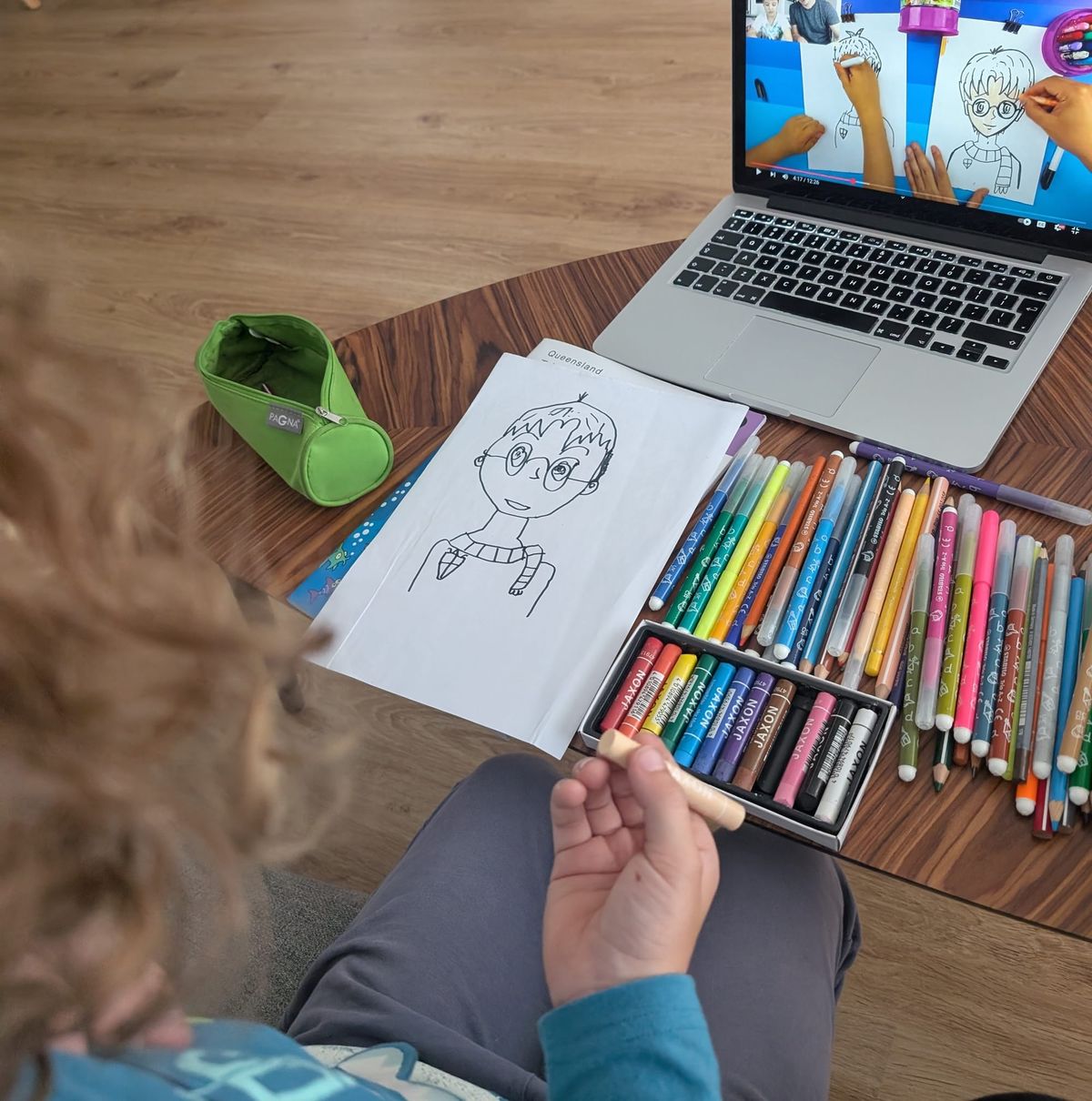
As homeschooling parents, many of us chose this path to step outside the standard factory-model education Sir Ken Robinson discussed years ago (wow, I remember when it was just out!) in his famous Ted talk.
This post is a review of the podcast episode in which Zak Stein, just like Sir Ken Robinson, argues that our current education institutions are failing because they were designed for a world that no longer exists.
Today, parents face a much deeper question than just choosing the right curriculum.
I hear this question all the time:
What are we actually training our kids for if the world is changing faster than the system can keep up?
This is a metacrisis we are living in: a convergence of complex, out-of-control ecological, technological, and social tipping points where all prior modeling goes out the window.
The old roadmap for success - go to school, get a degree, work a 40-year career in one stable field - now seems obsolete.
For generations, my family lived the story of career predictability: my grandmother taught at a single school for over sixty years, my mother spent her entire career as an economist, and my father climbed a traditional maritime ladder - from sailor to captain. I was the first to break the mold, constantly pivoting and switching paths. But my child is even more likely to abandon the old script entirely, and I am not sure I am ready to accept this. He is likely to redefine success altogether, moving past utilitarian metrics like test scores, ROI, and productivity hacks - toward something deeper.
At the same time, Zac points out, we are living through a "valley crossing." In a historically stable world, wisdom was passed down reliably as parents knew exactly how to teach their children because the environment remained constant.
Not anymore!
Parents keep asking each other:
What should my kids even study if AI is going to replace almost every standard white-collar career?
and
Why should our kids study hard to write essays or solve problems if an algorithm can just do it instantly? How do we motivate them?
But if a machine is more efficient than a human, should we still be measuring a human's worth by their efficiency? What makes life worth living cannot be easily quantified: peace inside us, deep human connection, community support, awe, creativity, play - all of this have intrinsic value for us that has nothing to do with our economic output and efficiency.
Perhaps we parents should stop asking ourselves if our children are going to be useful to the market.
What we need to ask instead is, perhaps, this:
- Is my child anchored in physical reality, or are they easily swept away by digital abstractions and anxiety?
- Can my child think clearly for themselves, identify what is true, and spot when they are being manipulated?
- Can my child form deep, real-world bonds, read human emotions, and communicate across differences?
If so, it doesn't matter if the job market completely shifts or if traditional institutions collapse: our kids will have the internal tools to step into the unknown, figure out what is real, build a community, and adapt.
Then, our role as (home) educators must shift.
We are not just teaching subjects; we are guiding "transitional humans" as they are "crossing the valley" and must learn to reinvent the world from the ground up.

Ten tips for parents and educators
I recommend you to watch/listen to this episode. But if you just want me to list some practical tips for parents Zac offers, here are my top ten:
- Cultivate situational awareness as an antidote to the "disembodied" nature of technologies - teach kids to:
- test concrete reality, be present in their environment, and be aware of how others are aware of them
- distinguish between what is happening inside their own heads (thoughts, anxieties, algorithmic loops) and what is actually happening in the physical world (the temperature of the air, the texture of an object, the physical mechanics of the room).
- understand behavior in terms of underlying mental states (desires, feelings, personal histories): in a physical room, they should be able to think:
I am here, they are here, I can read their body language, and I am aware of how my presence affects them.
Technology is not evil - but we parents need to be aware of its impacts.
Not everyone knows, for example, that using robotic toys or AI tools during a critical language acquisition window can interfere with a child's ability to parse speech streams - a process that requires the biological feedback of a real human face. And of course, technologies simulating intimacy exploit vulnerabilities (which is such a vast and important topic I will only mention it here without going too deep - something you can explore on your own).
- Curate the content
10-15 year old is the age band critical for frontal lobes development. The human mind is uniquely vulnerable to attention capture during formative years. This is the window for cultivating impulse control and the "willpower muscle" to pay attention even when bored. If a child’s attention is captured by high-stimulation, addictive algorithms during this period, they risk a permanent deficit in deep focus. Technology is not a neutral tool; Zac argues that it is an addictive substance requiring "nervous system buttressing."
- Zac says high-end addictive technologies should be treated like a liquor cabinet - keep it locked, do not buy the latest gaming consoles or provide unrestricted devices simply because of peer pressure.
If you don't know what gaming dark patterns are, here is a great resource: https://www.darkpattern.games
A gaming dark pattern is something that is deliberately added to a game to cause an unwanted negative experience for the player with a positive outcome for the game developer.
My family recently stayed at a hotel with a kids club. The kids club had a Playstation - a red flag, but I was genuinely hoping the educator will do something other than screen with the kids.
Needless to say, when I pick my kid up after a 2-hours session, he was playing Playstation - and not Mario or something pretty harmless but GTA... and here is the list of dark patterns this game offers.
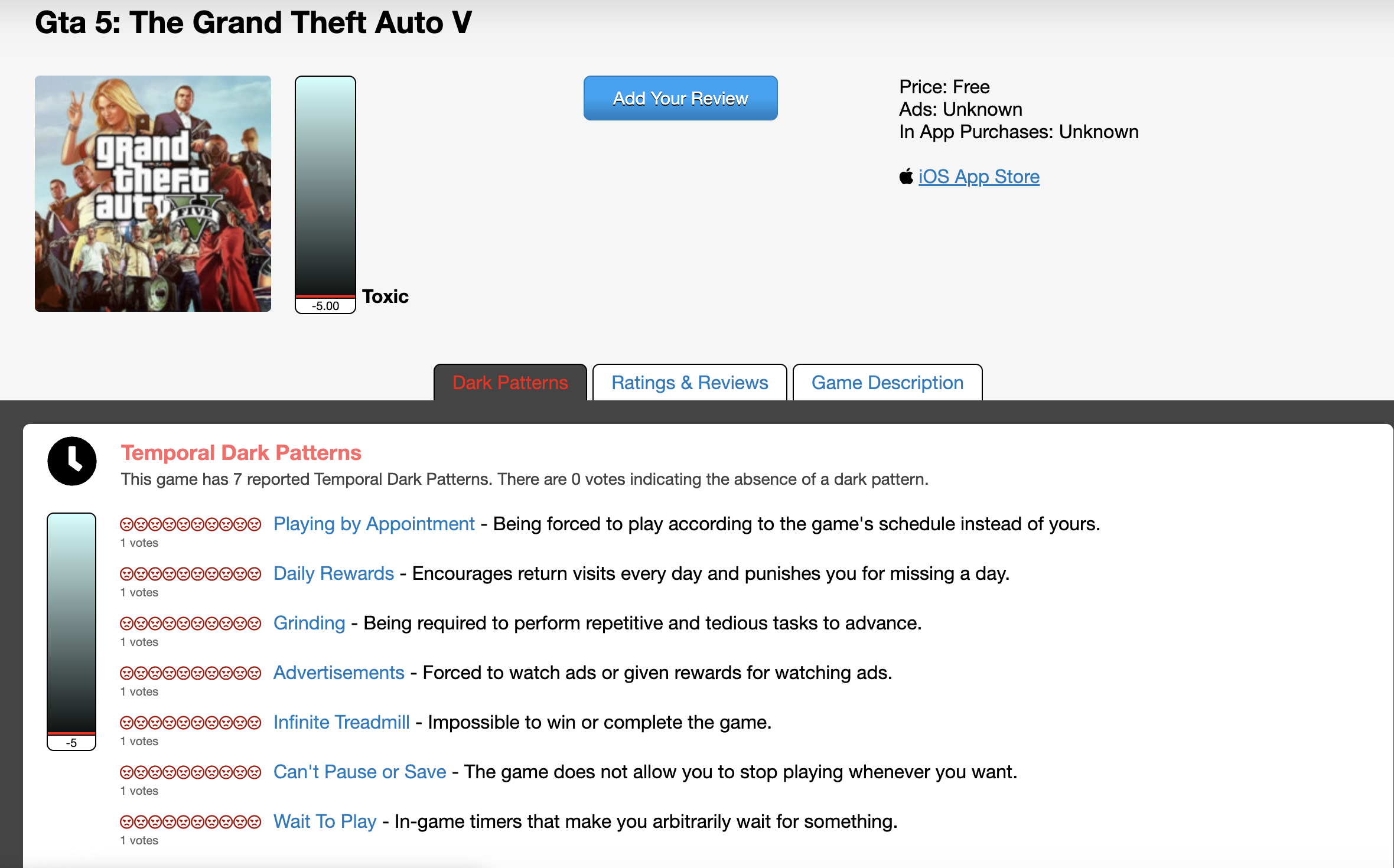
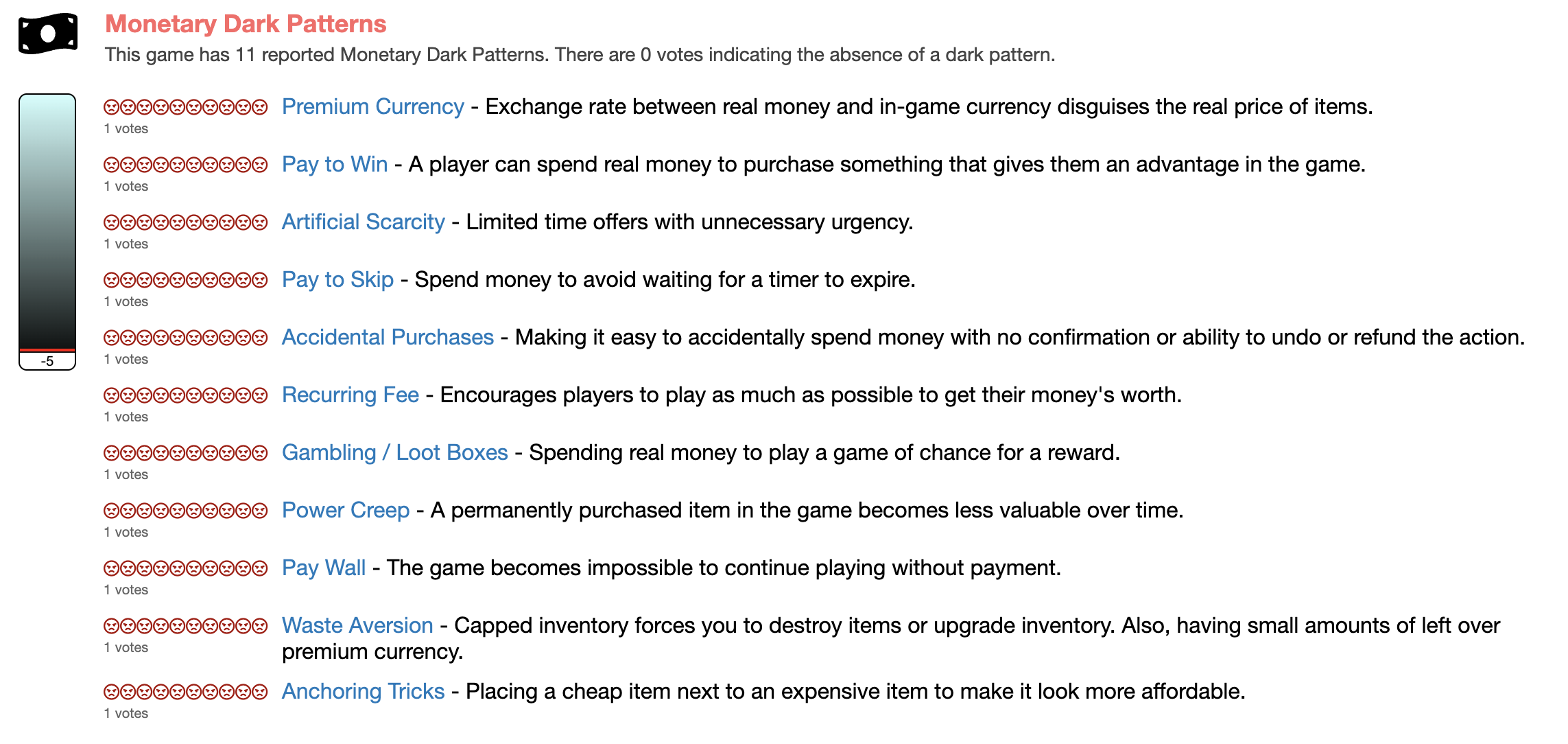
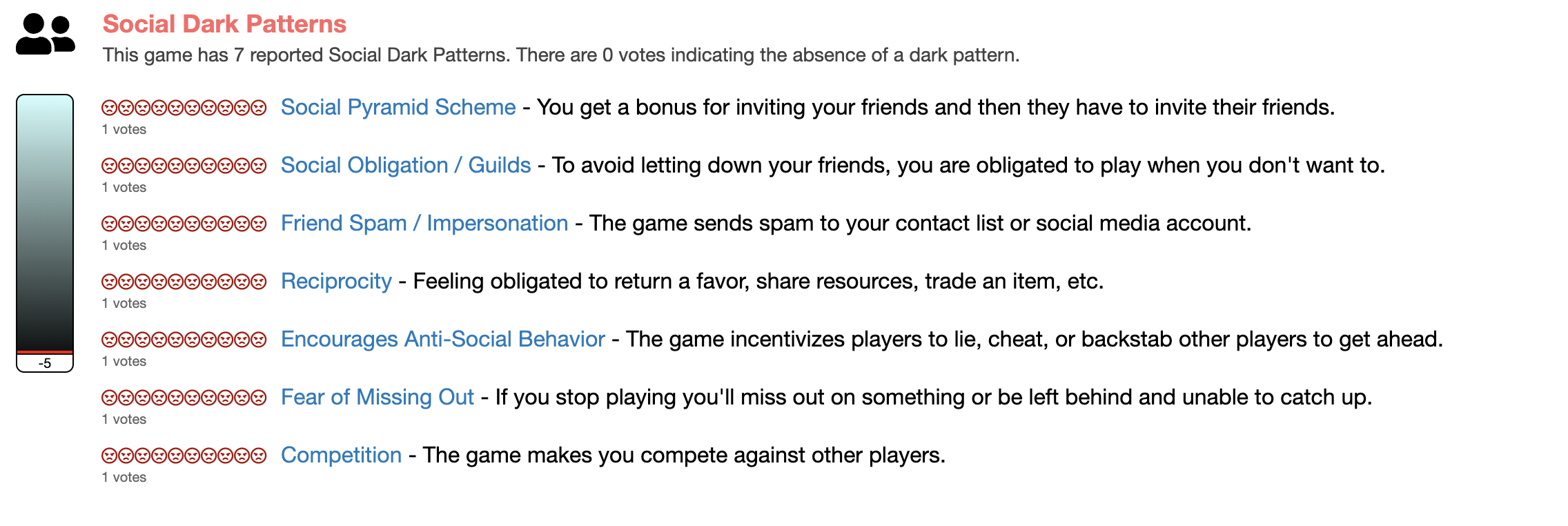
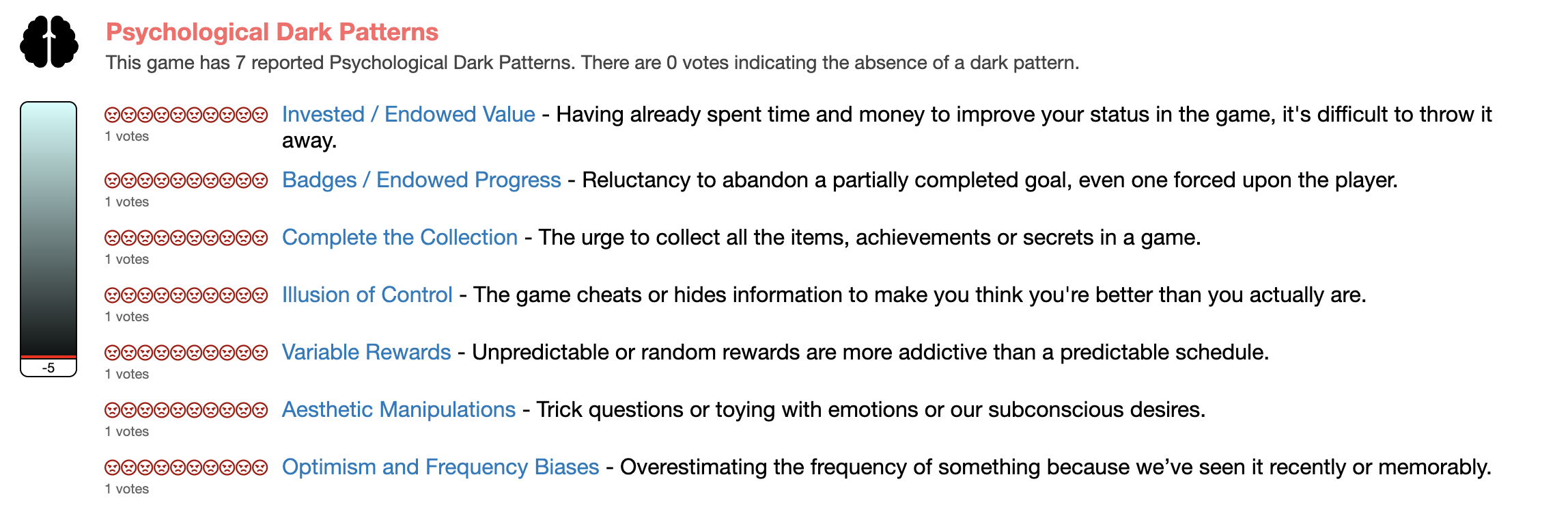
Parents need to educate themselves about things like this - it is our responsibility, it is about mental health, and it is about so much more, really.
- Attachment hacking is a real threat
AI systems used to simulate deep, human-like intimacy, exploiting our nervous system's built-in emotional bonding mechanisms - therapy apps, companionship apps, even simple chats with your LLM-based chatbots can be dangerous for kids.
- Parental modeling is the key
Kids are hyper-sensitive to hypocrisy: if we lecture them on screen time while being screen-addicted ourselves, they view devices as a high-value "adult" reward. We must resolve our own digital addictions first.

- Adjust your kids' learning objectives
Move away from abstract worksheets to solving actual, local problems: have your children learn science, mathematics, and civic responsibility by testing local river quality, building physical structures, growing food... the options are endless. Education should be deeply rooted in our local ecology, history, and community needs, transforming abstract concepts into lived experience.

- Move away from age-segregated learning
Seek out community mentors, craftsmen, scientists, and builders. Allow your children to work alongside masters.
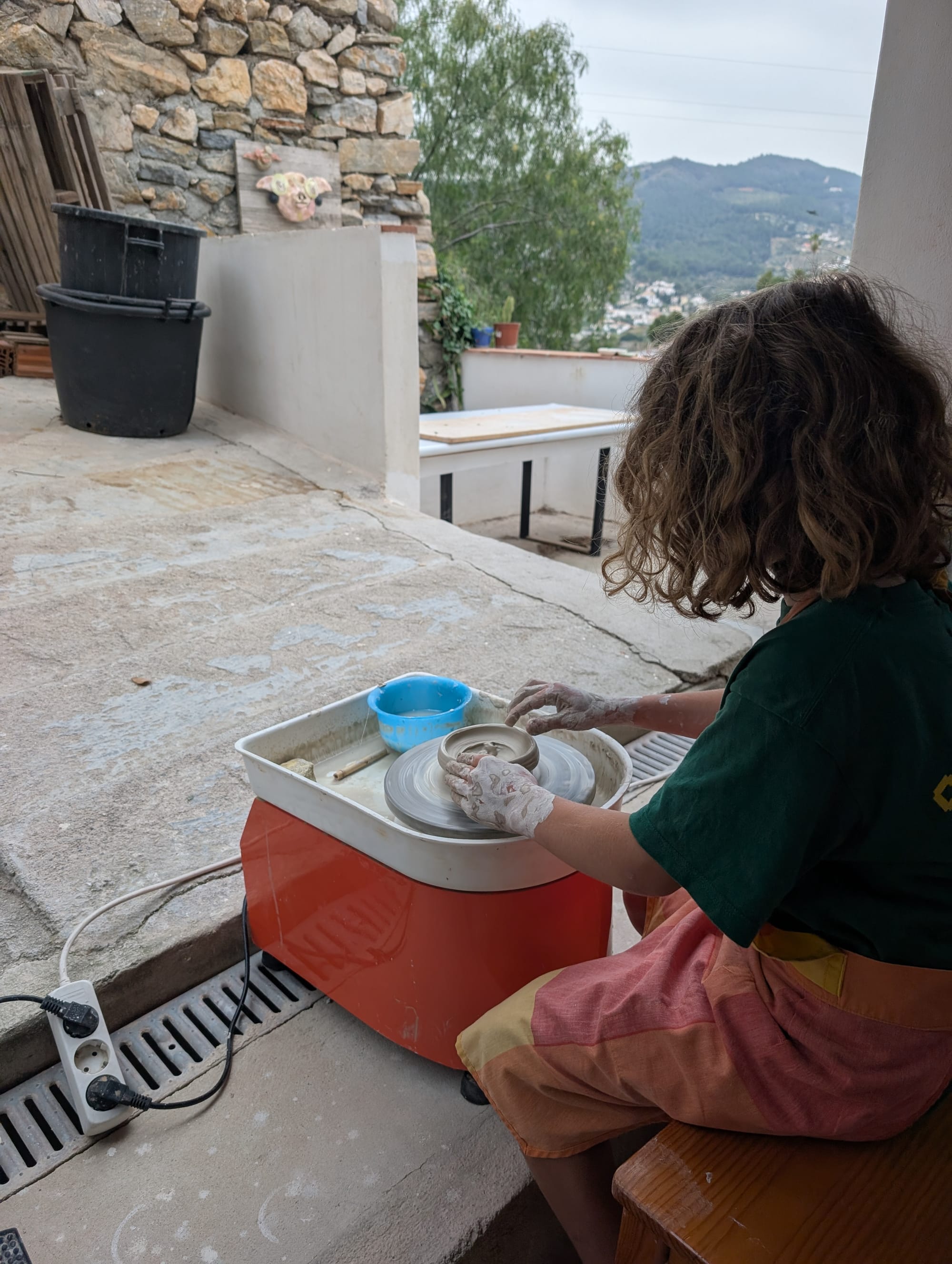
- Prioritize sensory-motor reality
When a child plays catch, learning pottery, or splashes water in a tub, they aren't just passing the time. They are building the physical, neurological scaffolding that their brains will later use to understand complex physics, advanced mathematics, social contracts, and deep philosophical concepts.
- Change your view on humanities - they are survival skills
Subjects like philosophy, history, and literature are not just decorative electives anymore - they are survival tools for cutting through noise and manipulation. Use them to teach your kids how to spot propaganda, dissect human motives, and anchor their own moral compass in a chaotic world.

- Awe before awful
Before we expose our children to the trauma of global ecological or social destruction, we must teach them to revere and love the natural world. A child must experience the awe of nature firsthand if they are to have the internal resilience to care for it later. They must want to save the world because they have first loved it.

- Post-tragic humour
Zak Stein discusses humor as his primary method for staying sane and "fully human" while dealing with the "front line" of the metacrisis. He introduces the concept of "post-tragic humor" as a vital psychological and developmental tool. Laughter, he says, is the highest level of perception because it allows a person to perceive and "dance in" paradoxes, ironies, and inconsistencies. He compares the necessary mindset to "trench humor" in warfare or the humor found in recovery communities like Alcoholics Anonymous, where people have been through significant hardship and use laughter to cope with the "terrible" and "dangerous" nature of their reality.

If a parent or teacher becomes too serious and loses the ability to laugh, it becomes much harder to raise or educate children through a crisis. It is not anti-tragic" (ignoring the tragedy), but rather "post-tragic" - humor that exists on the other side of "complete destruction and tears" and is a good way to process trauma and deal with difficult emotions.
Now, frameworks are helpful, but survival is mandatory! We still use workbooks in our house - though I do my best to gamify lessons (and a Minecraft-themed English book is a hit right now!).
As parents, our time and energy are finite, and the ultimate golden rule of homeschooling is simply doing what works for your family. However, new tech introduces entirely new challenges and risks for our kids that we cannot ignore. Use these tips as a guide - adapt them to your routine and make them your own. At least that's what I will certainly do.