#6 - AI-driven workforce transformation, AI in medicine, and history under our feet
In this week's issue, we dive into the impact of AI adoption on workforce transformation, discuss Utah's pioneering autonomous medical prescription pilot, and explore what the rise of AI means for our personal health.


Hi all!
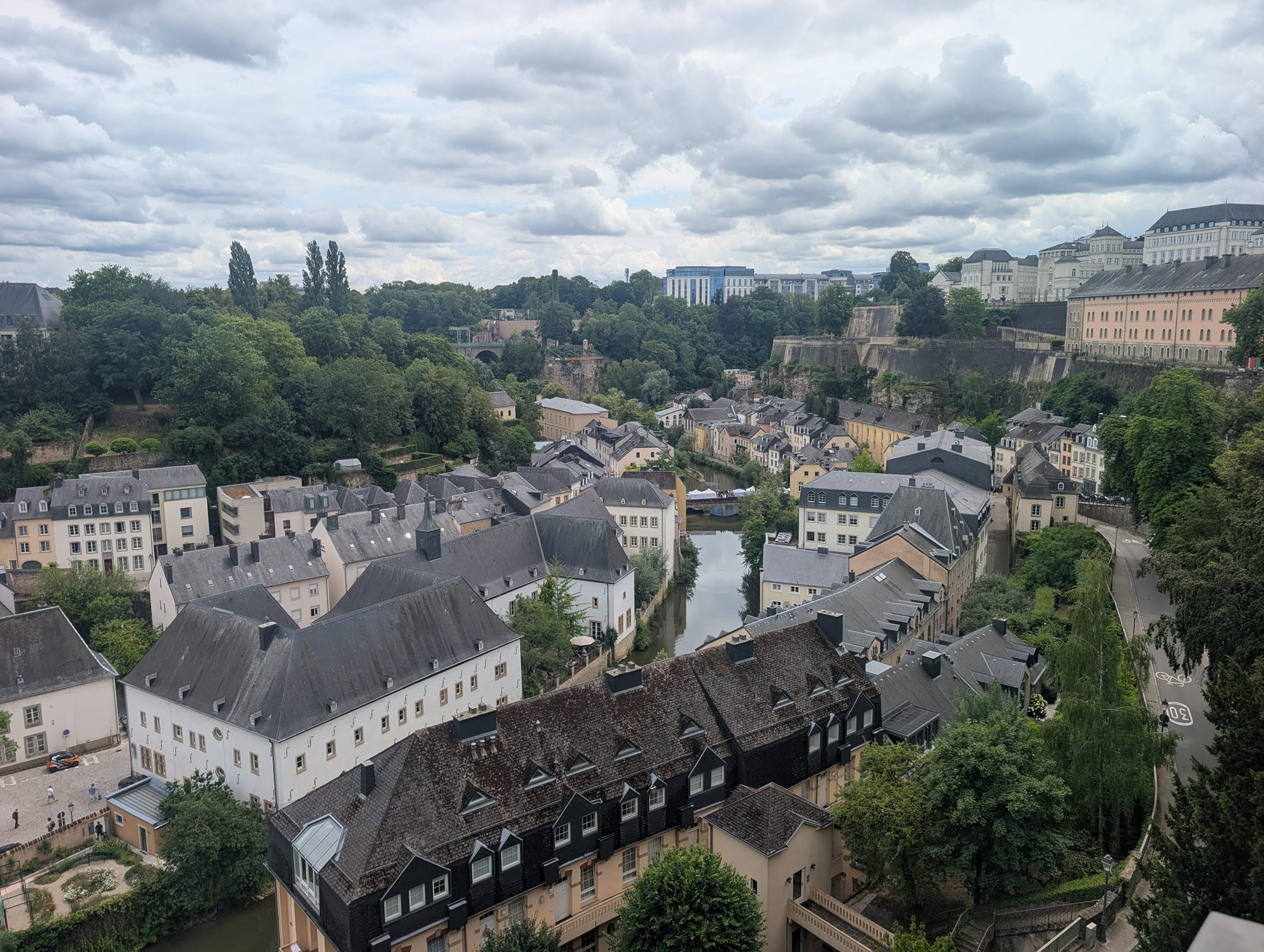
To begin with, look at this - Luxembourg in summer is much more cheerful than in winter! It is not where I live - it's Luxembourg Ville, the capital - but it's a lovely place to come for a walk.
AI adoption and workforce transformation
I am subscribed to the The Mandarin newsletter - which often discusses AI in public service these days - and today it highlighted a fascinating new whitepaper on AI adoption and workforce transformation by the SAP SuccessFactors Future of Work Research Lab: Reimagining Public Administration HR Leadership in AI Transformation.
While the report focuses on the public sector, its findings apply universally:
AI is not a simple tech rollout.
It radically changes the "psychological contract" - the unwritten, unspoken exchange of respect, security, and fairness between employees and employers.
Old tech changed the tools we used, making us feel clumsy ("I don't know how to use this tool!"). AI does that too - but it also changes who makes the decisions, leaving employees feeling replaceable. Many are left asking: How can I feel a sense of pride and ownership in my work when I feel like I am just supervising an algorithm that could eventually do my job without me?
The report highlights another critical misstep: leadership often assumes that saved time automatically equals pure productivity.
The truth is efficiency gains simply create unallocated capacity.
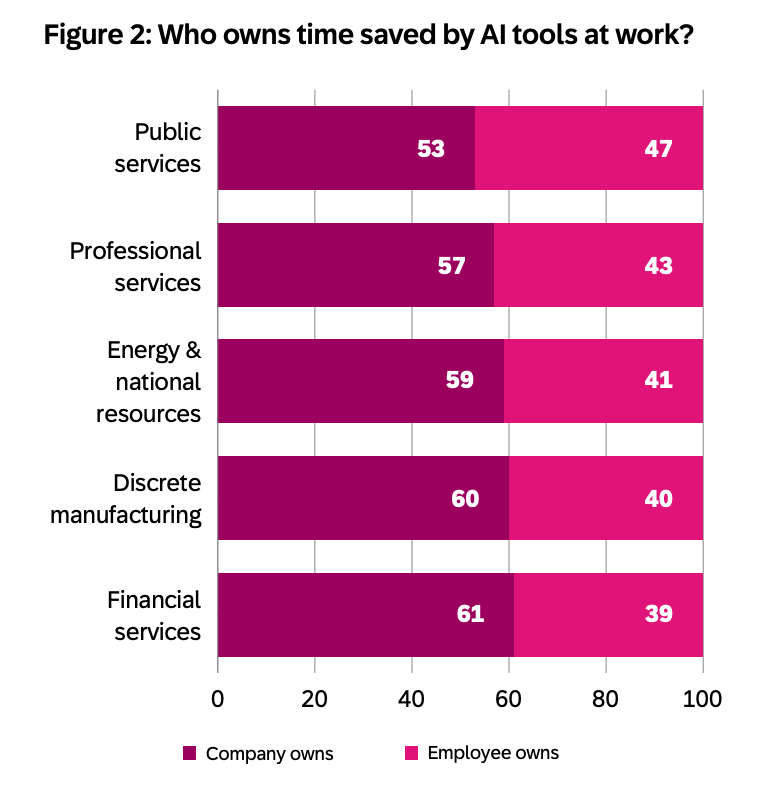
While workers may agree that the company owns that saved time, they will not automatically work harder. Because human brains don't like vacuum spaces, unstructured downtime quickly leads to cognitive underload, anxiety, and distraction (hello, doomscrolling). Without intentional upskilling pathways, saved time is entirely lost to a fragmented, low-value workplace culture.
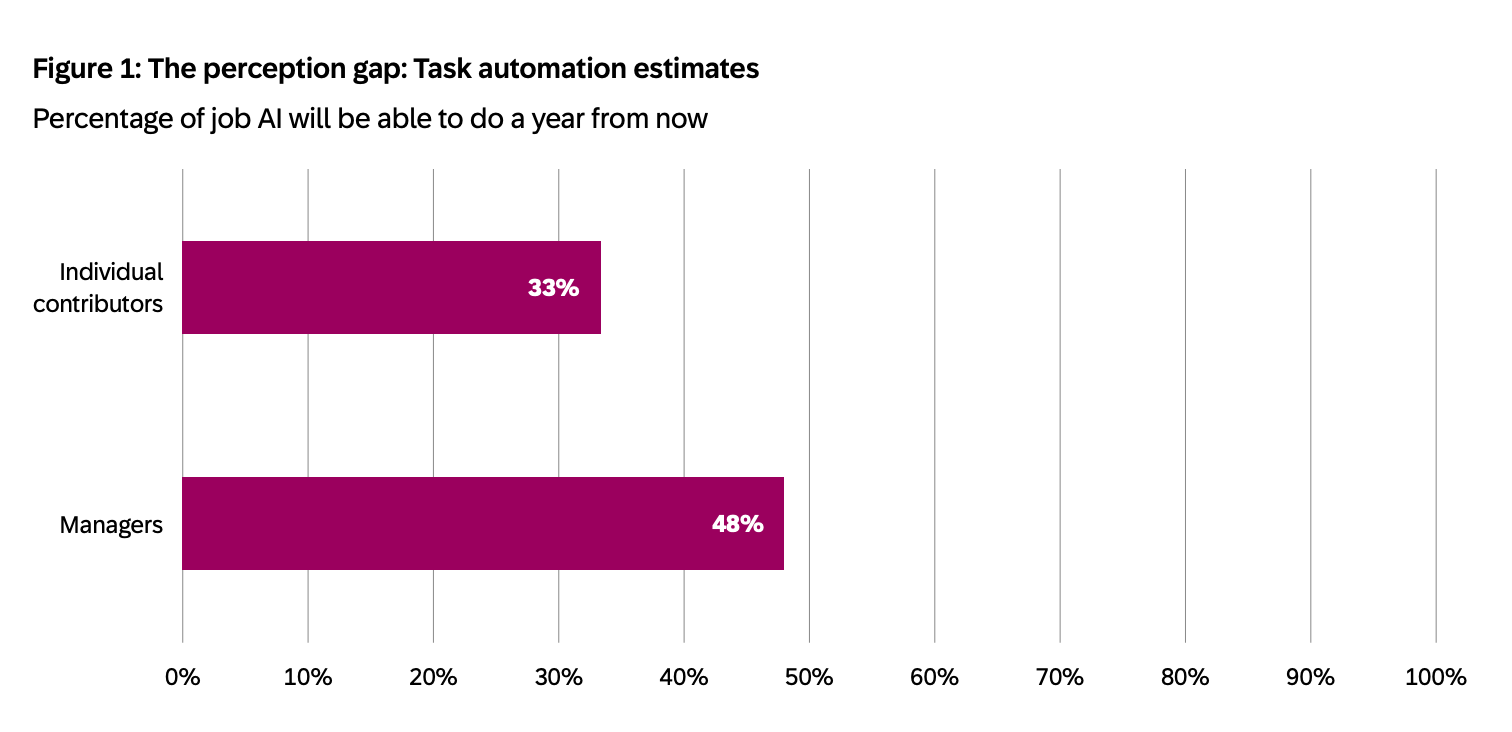
Furthermore, leadership often views AI as a quick fix to automate an unrealistic number of tasks, while frontline workers see far less automation potential.
Pushing too fast makes the frontline feel threatened; without extreme transparency, 50% to 62% of employees experience a direct drop in motivation.
How can employees take control of this shift?
- Audit your nuance: Document and highlight the parts of your job requiring human context, ethics, and empathy - that's what AI misses.
- Reinvest your time: Proactively approach managers with a clear plan to reinvest freed hours into professional growth and high-visibility projects.
- Demand transparency: If HR or management uses AI tools, ask for the evidence behind algorithmic recommendations. Request human-to-human career coaching to prevent managers from becoming detached "algorithmic bosses."
Ultimately, AI cannot replicate contextual judgment, ethical boundary-setting, and genuine human connection. Leaning into these uniquely human strengths is our collective career security. Everyone must have a seat at the table to speak up if a tool fails to protect employee welfare, privacy, or trust.
The Utah experiment: AI in medicine
Now, forget abstract think-pieces on AI regulation. If you want to see where real-world AI adoption is actually heading, look at Utah's new prescription renewal pilot.
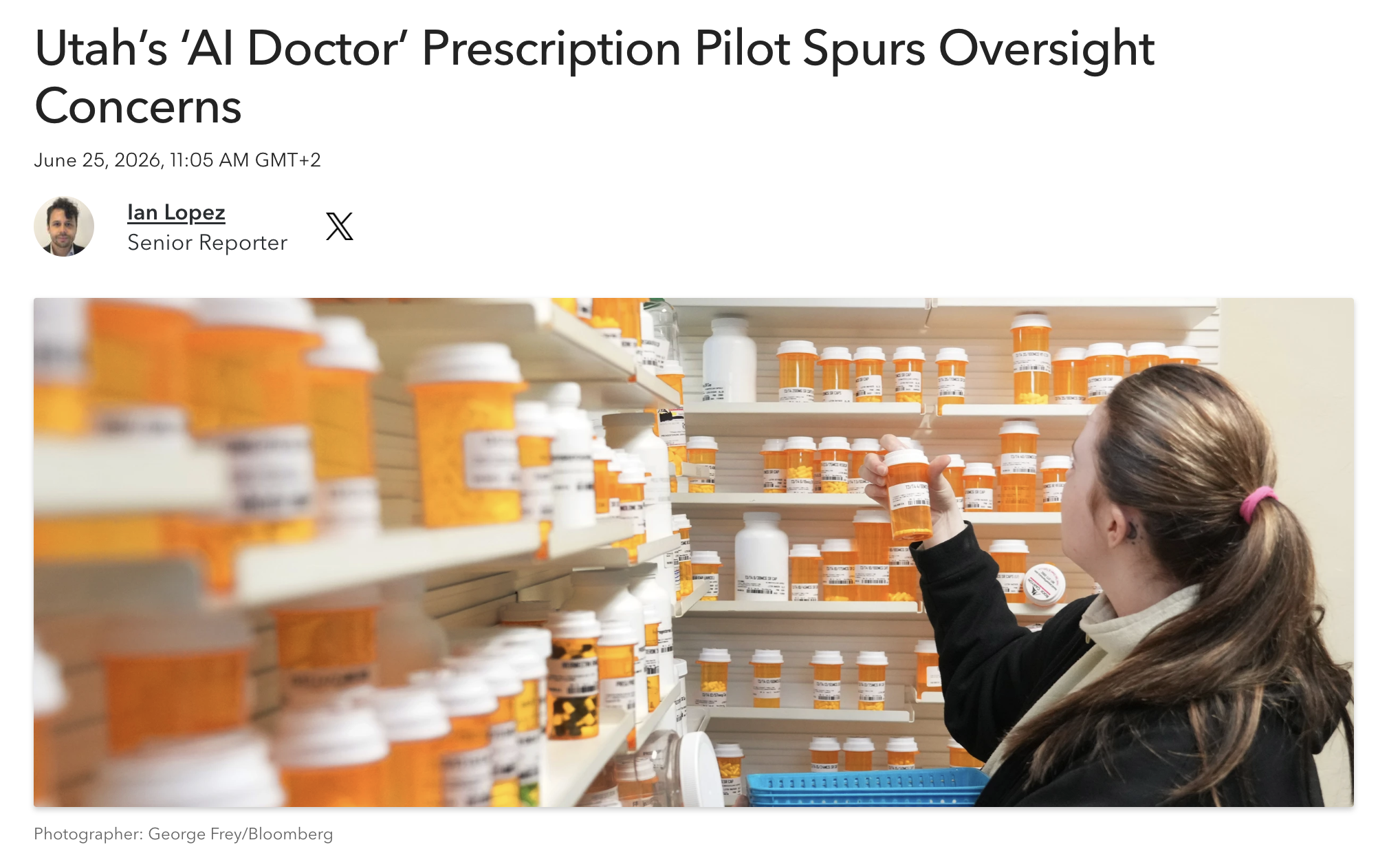
For the first time in the United States, a state regulator has empowered an AI chatbot - built by the health platform Doctronic - to handle routine prescription renewals directly. No phone tag, no waiting rooms. A secure AI chat verifies an active prescription, reviews your current health status for changes, and routes the approval to your pharmacy. Refills start at $0 (compared to $39 for a video visit with a human doctor on the same platform).
Predictably, the headlines are split: Politico ran with "Artificial intelligence begins prescribing medications," while the local Salt Lake Tribune cautioned, "A tech company touts the benefits, but doctors have concerns."
Both are right. Here is what is actually happening under the hood.
How it works (and what it covers)
While Doctronic operates across the US, Utah is the only state where the AI itself - not a human doctor using an AI tool - is legally authorised to complete the renewal loop.
The pilot is strictly limited to 192 common medications used for stable, chronic conditions like hypertension, high cholesterol, diabetes, and depression.
A published study of real-world cases claims the AI achieved a 99.2% treatment plan alignment with board-certified clinicians - a metric that independent auditors will undoubtedly be watching closely.
Currently, the project is still in Phase 1: Doctronic's human physicians must manually review and approve 100% of the AI's refill decisions before they go to the pharmacy.
Once the AI successfully processes 250 refills within a specific drug group, the state can advance it to Phase 2. Here, the AI issues renewals directly, and physicians vet the next 1,000 patients retroactively.
Finally, in Phase 3, the AI operates fully autonomously, with human doctors only running a spot-check quality audit on a random 5% to 10% sample of cases monthly.
The legal loophole: Utah’s regulatory sandbox
Writing a prescription without a human medical license is strictly illegal. So, how did Doctronic bypass this?
Through a mechanism called a regulatory sandbox. Under the Utah Artificial Intelligence Policy Act, the state created the Office of Artificial Intelligence Policy. This office has the unique authority to temporarily waive state licensing laws for 12 months so companies can test promising AI products in the real world.
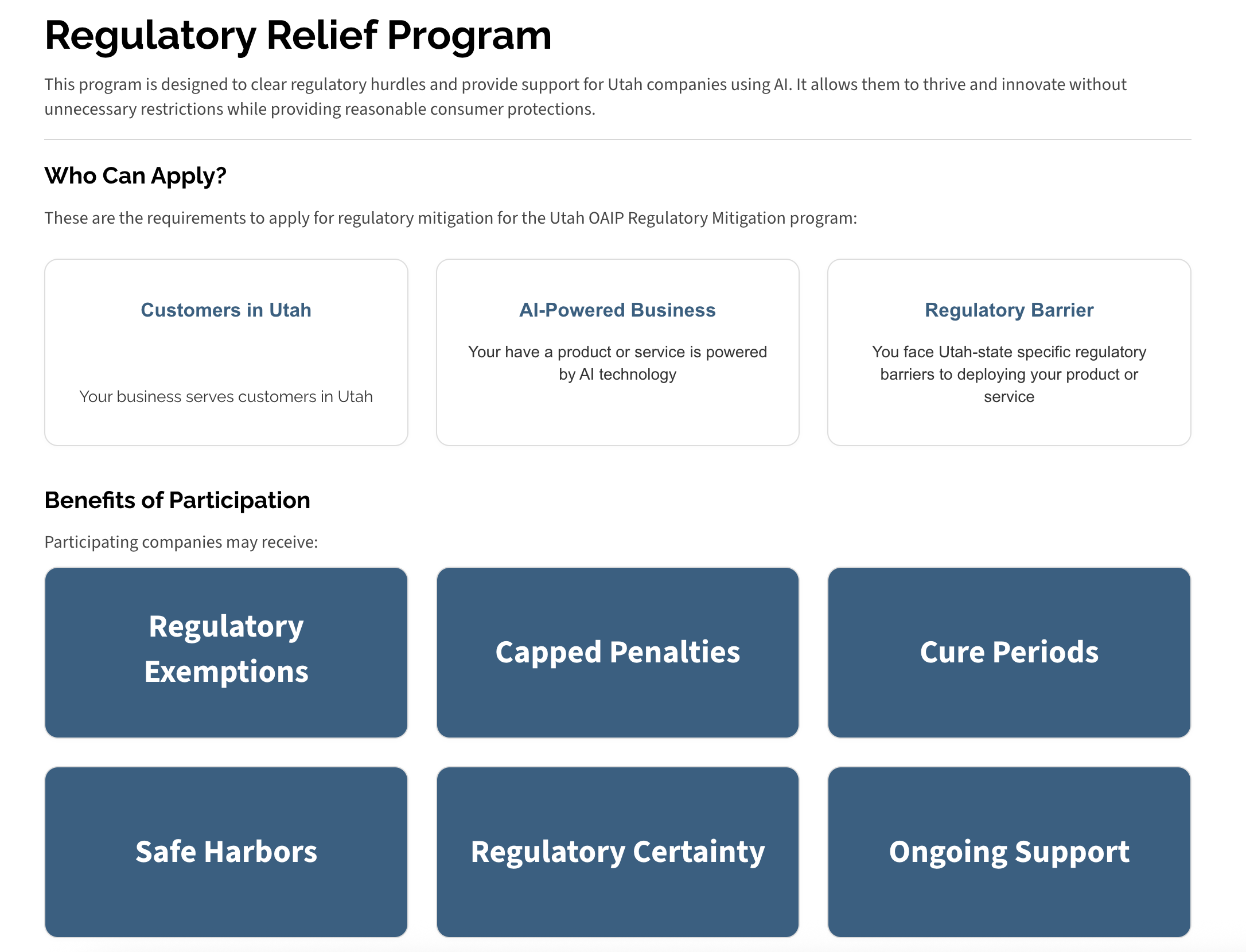
The state applied a pragmatic risk calculus: for a new diagnosis, you need a human doctor. But for the renewal of an existing, stable medication, what the patient needs is continuity, not a new diagnosis. It is the exact same logic that allows pharmacists in many countries to extend routine refills - just handed over to an algorithm.
Critics, however, have raised valid red flags:
- What if a patient's condition has silently changed?
- What if the AI misses a subtle contraindication?
- While Doctronic is fully HIPAA-compliant, processing sensitive health data through an LLM introduces a permanent, real-world risk surface.
This is a masterclass in governance by doing: instead of endlessly debating the abstract ethics of AI in healthcare, Utah built a highly constrained, audited environment with strict guardrails: renewals only, established dosages, and a 12-month clock.
I guess it’s a reminder that the most consequential AI regulations might not come from grand frameworks in Brussels or Washington - they may come from practical, state-level boards deciding to try something new rather than waiting for permission. At the same time, the critics are right - the risks are real, too.
🏠 Using AI for your family's health
The Utah pilot is fascinating at the policy level, but most of us are not in Utah. So what does AI in healthcare look like for the rest of us?
Here are some practical ways to use AI for your family's health:
- Use AI as a symptom checker - but only as a first step, not a diagnosis
AI tools can help us figure out whether that rash or cough needs a doctor. The trick: treat them like a triage nurse, not a specialist. They're excellent at asking the right follow-up questions. They're terrible at edge cases. If the AI says "see a doctor," see a doctor.
- Prepare for doctor visits with AI
This is my favorite practical use. Couple of years ago, kind of "before the AI" as we know it today, I showed up at the doctors with a handmade chart of my blood test indicators fluctuations over time. These days, I chat with an AI tool before the doctor's appointment - I describe my symptoms, it asks questions my doctor will also ask, and by the time I am in the room, I have already thought through the timeline, the triggers, and the things that make my condition better or worse. I know so much more about my body now, too, as I learn so much through these conversations. And I know that informed patients have better outcomes.
I also ask AI analyse my blood test (and other medical reports) and, what's more important, explain the medical jargon to me.
⚠️ Privacy check: before you copy and paste any medical document, delete your name, date of birth, medical record number, and the clinic's name. Keep the data strictly anonymous.
- Know the boundary
Here's the most important rule: AI is for information, not for decisions about life and death.
✅ Use AI to understand what a test result might mean
✅ Use AI to prepare questions for your doctor
❌ Never use AI to decide whether to starts or stop taking a medication
❌ Never use AI to diagnose your child's high fever at 2am instead of calling a nurse line
Off-duty
Here is a bit of what's shaping my life outside of work right now.
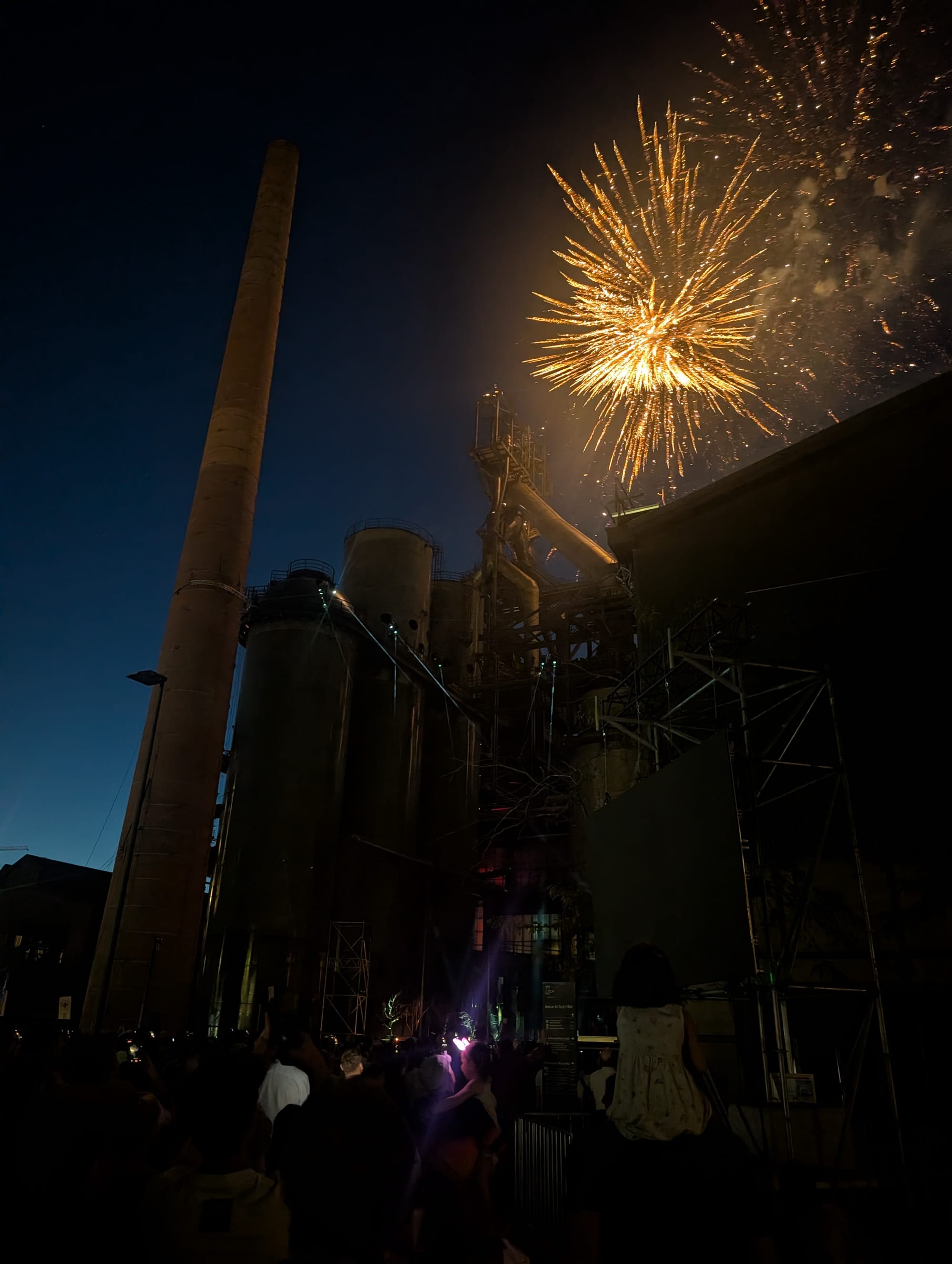
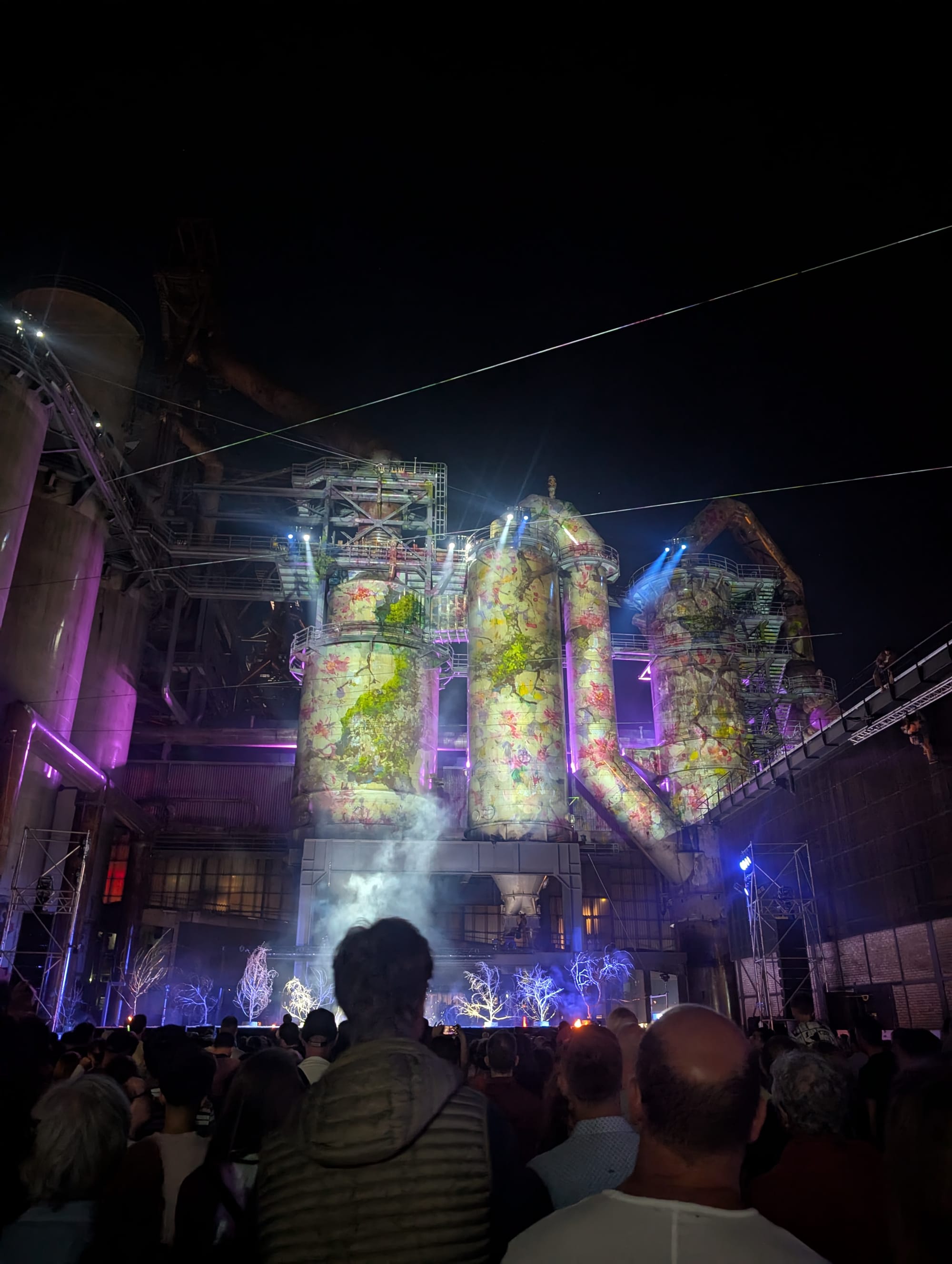
Last weekend, I went to see the Fête des Hauts Fourneaux (Blast Furnace Festival) - an annual cultural and heritage event hosted at the iconic former steelworks in Esch-Belval, Luxembourg. The free summer festival celebrates the country's industrial heritage - and it's always amazing.
For decades, these blast furnaces shaped Luxembourg's economy and society. The steel industry didn't just build infrastructure - it built communities, attracted waves of immigration, and shaped the national identity.
You can feel this "Minett" (the iron ore region) identity everywhere - for example, I found it amazing how a hospital, instead of naming its wings after cold, clinical letters, chose names deeply rooted in the local history:
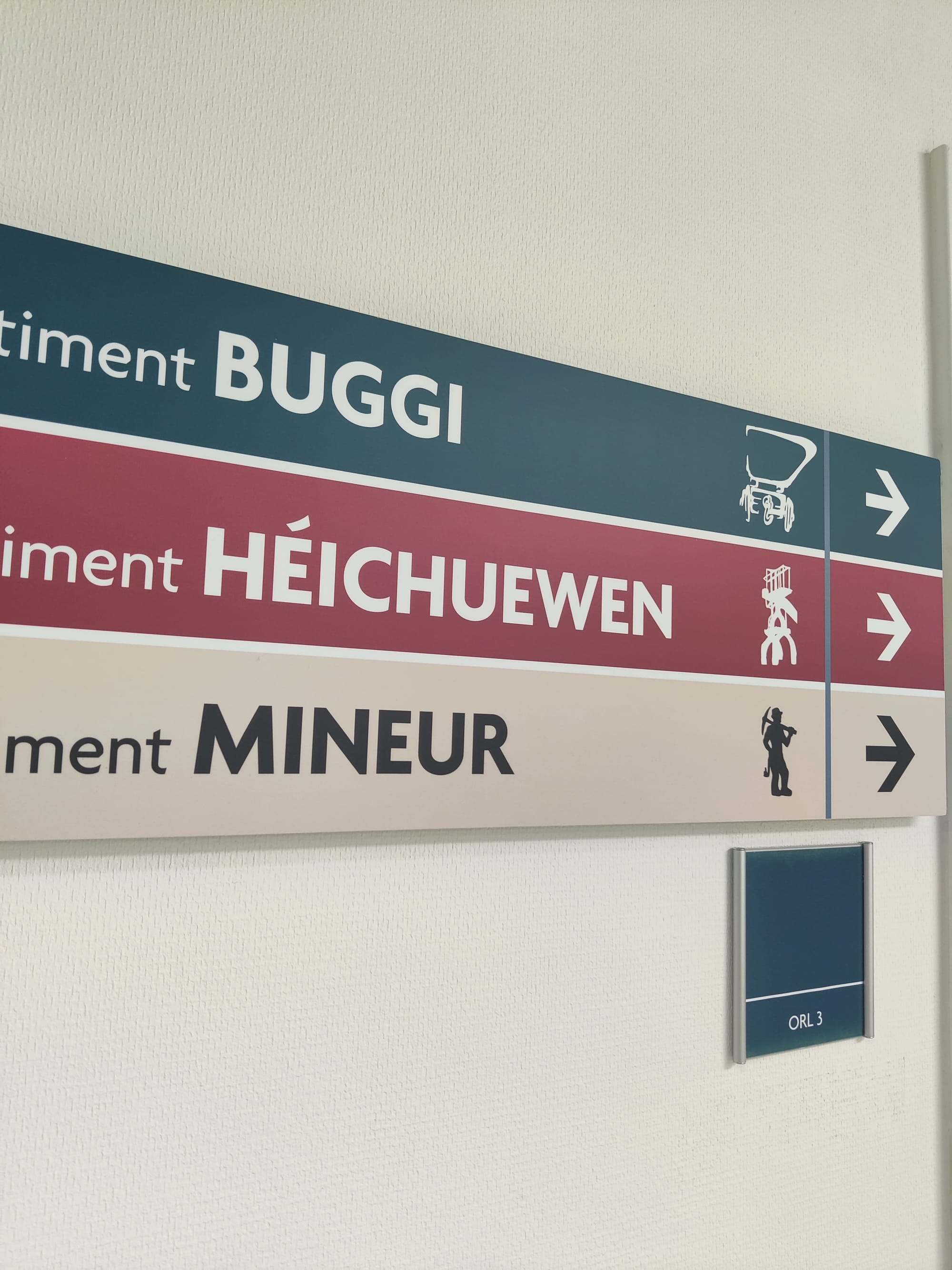
"Buggi" (or Buggy) - mining carts, "Heíchuewen" - blast furnaces in Luxembourgish, and "Mineur" - French for miner, honoring the thousands of workers who built the region.
It really shows that in the south of Luxembourg, industrial heritage is not just something left behind in museums - it's woven into the fabric of daily, modern life.
Or this - I went for a run the other day and found this:
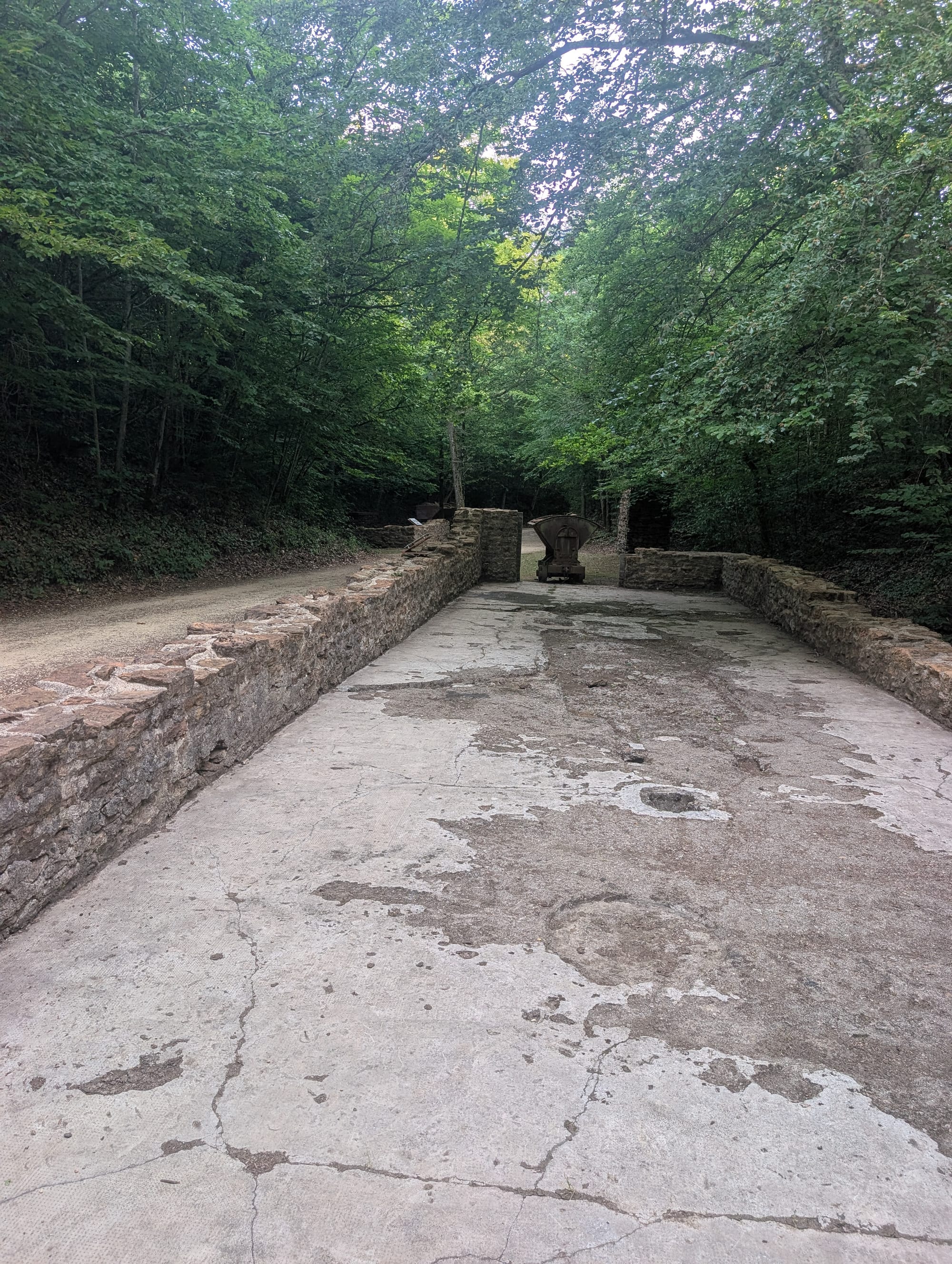
This place in the middle of the forest used to be an old open-cast mining site. Unlike the deep underground tunnels nearby, miners here worked the surface, digging through a red top layer, a three-meter-thick gray layer, and a final black layer of pebbly, 30% iron ore. That very stone was hauled by locomotives and horses straight to the ARBED plant in Esch - the exact site of the festival!
All this makes you realise how close the past always is, doesn't it?
Thanks for reading! As always, I am curious to hear your thoughts - if you feel like it, please do reply directly to this email, or post something on LinkedIn and tag me.
- Let's connect: if we aren't LinkedIn official yet, let's change that!
- If you liked this issue, please forward it to a friend! It’s the best way to help this newsletter grow.
- If you were forwarded this email, you can subscribe to the newsletter here.
- All previous editions of this newsletter are available here.
Have a great week ahead!
—Katya