AI, Quantum and Sustainability: Univeristy of Luxembourg Quantum Breakfast
Last week, I attended a Quantum Breakfast - one of the very popular event series at the University of Luxembourg.
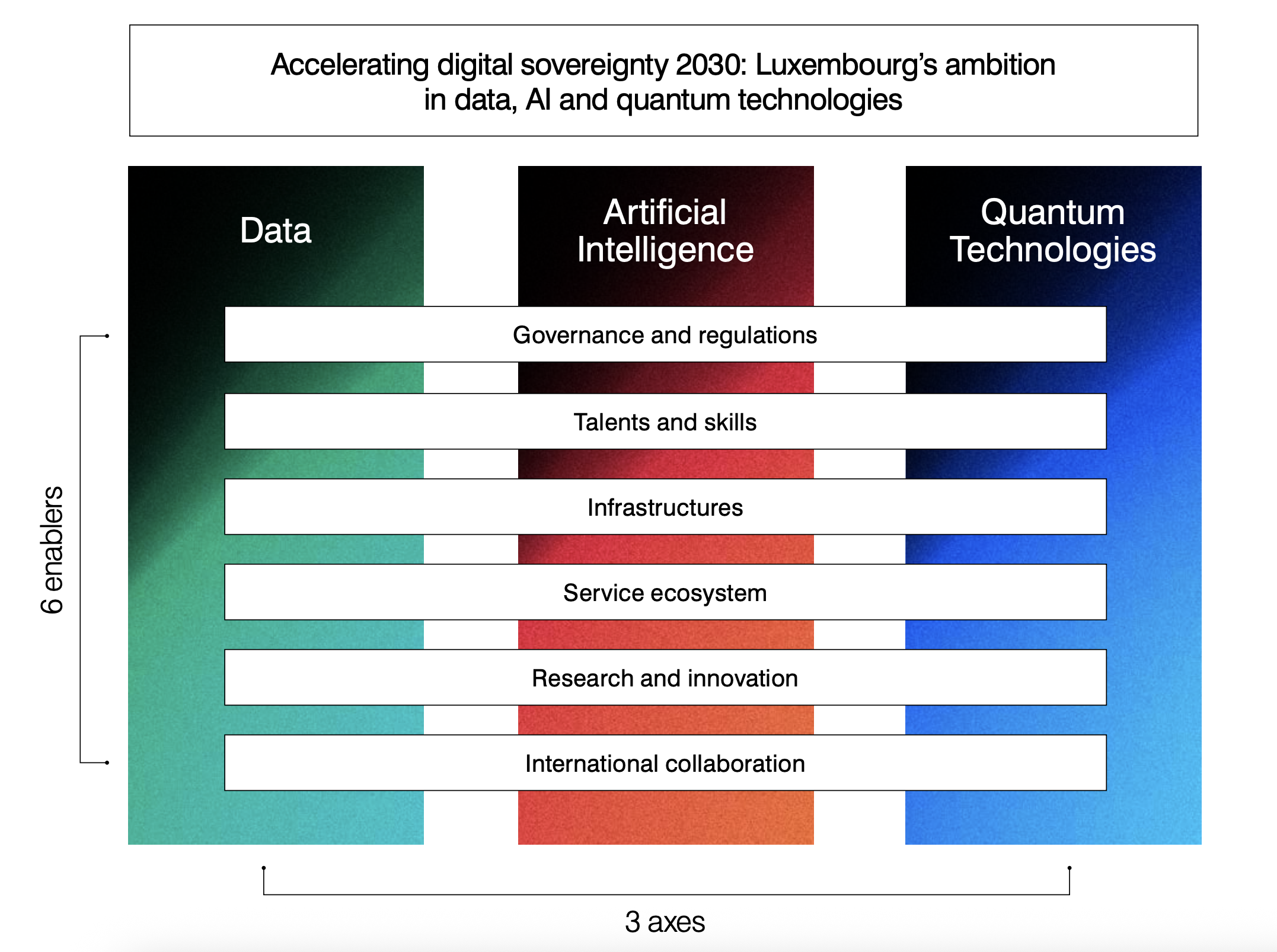
Quantum has been in the centre of many discussions in Luxembourg (and, of course, not only) because it is one of the three "enablers": data is the raw material, AI is the engine used to extract value from data, and quantum technologies are the infrastructure layer that will push past the current physical limits of computation speed, data analysis, and cryptographic security.
I went into this session wanting to learn more about the relationship between quantum and sustainability - and I left with a refreshing reality check.
💡 Quick jargon buster
Before diving in, let's establish a few basic definitions:
Superconductivity - a state where electricity can flow through a material with absolutely zero electrical resistance (to achieve this, materials must be kept incredibly cold!).
Qubits - the basic unit of information in quantum computing (unlike regular computer bits (which are strictly 0 or 1), qubits can exist as 0, 1, or both at the same time, and this superpower allows them to process complex data at unprecedented speeds).
Superposition - the ability of a quantum system to be in multiple states at the same time.
Quantum Error Correction (QEC) - a collection of techniques used to protect quantum information from decoherence and noise (because physical qubits are highly prone to errors, QEC groups multiple fragile physical qubits together to act as a single, highly stable logical qubit).
Quantum supremacy/advantage - the milestone point at which a quantum computer can perform a specific calculation that is practically impossible for even the world's most powerful classical supercomputers to solve in a reasonable timeframe.
NISQ (Noisy Intermediate-Scale Quantum) - YOU ARE HERE - it is the current era of quantum computing. NISQ devices have a modest number of qubits (tens to hundreds) that are "noisy" and prone to errors because full Quantum Error Correction has not been achieved yet.
FTQC (Fault-Tolerant Quantum Computing) - the ultimate goal of the industry - a mature quantum computer that has enough physical qubits to successfully run error-correction codes, allowing it to run long, complex algorithms.
Given the panel's title - Quantum, AI and Sustainability - I, like many others, expected a chorus of "sustainability is our primary concern!"
However, as the panelists pointed out, claiming that right now would be greenwashing. Because qubits are incredibly fragile, the immediate engineering milestone is survival, not environmental optimisation. If you cannot achieve fault tolerance, mitigate environmental noise, or successfully scale physical qubits into logical ones, the technology simply does not exist in a commercially viable way.
This creates a fascinating paradox: quantum development currently requires massive amounts of energy and rare resources (like Helium-3 which is so rare on Earth that we currently have to harvest it from nuclear weapons stockpiles, though we may eventually mine it on the Moon!) just to keep these machines VERY COLD and running.
Current setups running cryostat equipment (ultra-advanced deep freezers) at 4 Kelvin (-269.15 C) consume roughly 1kW of energy - about the same as a coffee maker. But to build truly scalable, fault-tolerant processors, we have to drop down to the optimal operating temperature for superconducting qubits: a freezing 0.01 Kelvin, and this requires a lot of energy and obtaining more Helium-3.
Yet, the entire promise of the quantum technology is tied to global sustainability.
We hope that quantum algorithms will revolutionise battery chemistry, optimise grid efficiency, discover breakthrough carbon-capture materials... and because these future payoffs are so huge, the industry gets a pass on its current infrastructure inefficiencies.
(by the way, I hear you say "define future" - check out the EU Quantum Strategy: by 2030, Europe aims to prove the viability of stable hardware on a small industrial scale, and by 2035, the goal is full-scale commercial dominance where the EU will become the first continent to field machines powerful enough to fundamentally disrupt global industries).
And once the hardware design stabilises and we hit true quantum advantage, the engineering focus will naturally shift from "Can we build it?" to "Can we build it efficiently?"
Another point that was made during the panel discussion was that we will likely achieve energy advantage long before computational advantage. What does it mean?
Imagine a highly complex material science problem. A classical supercomputer uses a moderate amount of power per second, but must run at peak capacity for an entire year to solve it, consuming a lot of energy. But the fault-tolerant quantum computer that draws massive amounts of power to keep its environment VERY COLD, solves the problem in minutes. Ultimately, running a giant freezer for ten minutes uses vastly less total electricity than running a massive data center 24/7 for 365 days.
While quantum is not a universal fix for every hard math problem, it may completely reinvent medicine and material science, and that alone would be enough to change the world.
What about space?
Then, the discussion moved to space - space exploration remains sustainable in the long term thanks to AI, quantum tech and orbital robotics, which all help to actively manage space traffic, automate vehicle maintenance, and clear orbital debris.
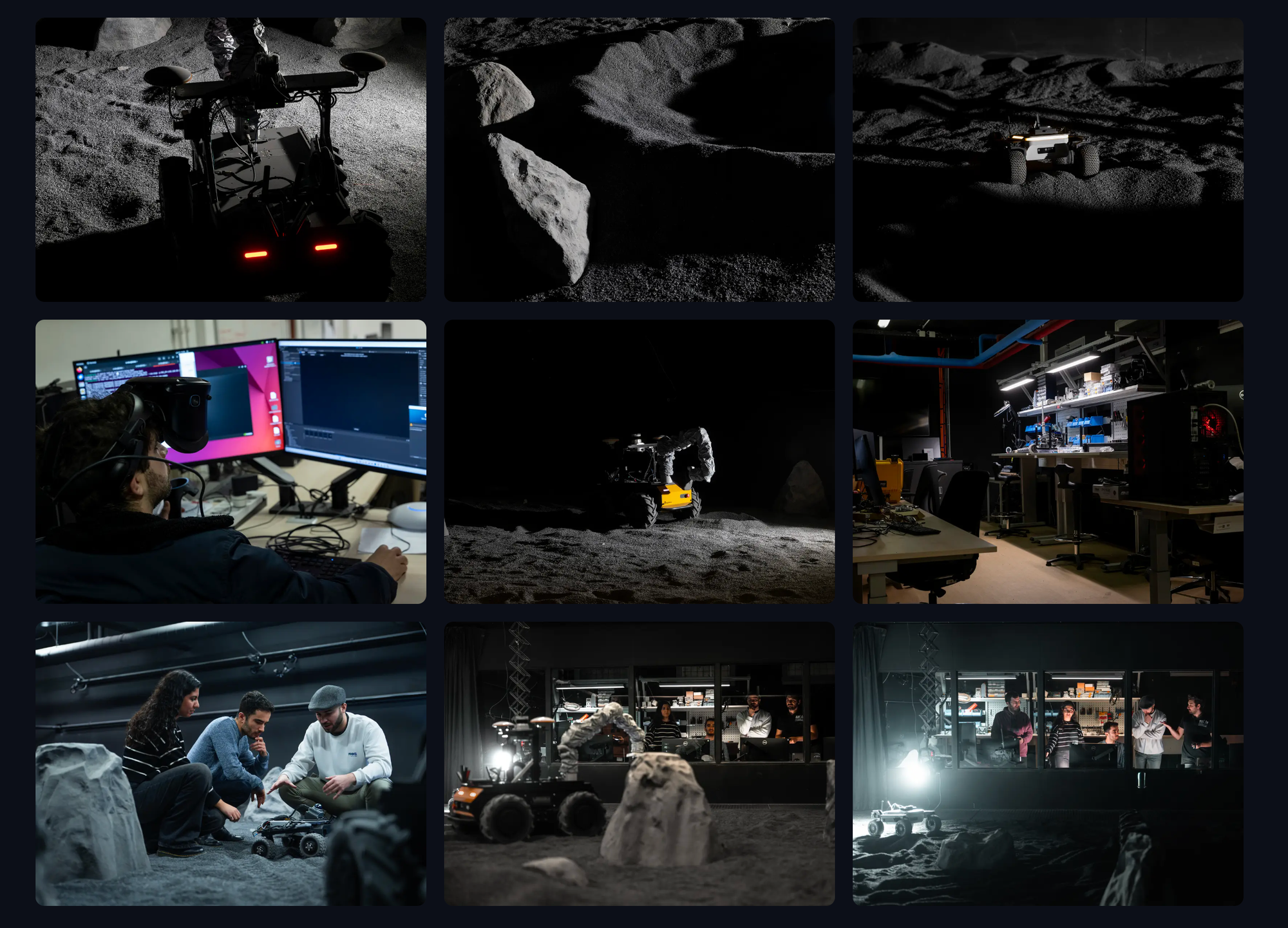
Curious fact: Luxembourg's spaceR - a space robotics research group at SnT, University of Luxembourg, led by Prof. Dr. Miguel Olivares-Mendez - operates a laboratory acting as a lunar analogue facility, basically a basalt 'sandbox' emulating the surface of the Moon! 12 cameras of a motion capture system, 3 IP cameras to register experiments, and the low-angle illumination (3–6°) just like the one found at the polar regions of the Moon - how amazing is that?
The relationship between quantum and space is not a one-way street: the space sustainability needs quantum capabilities to solve the debris crisis, and quantum tech needs space - for example, because space provides the ideal microgravity and isolated environment for quantum sensors and clocks to achieve performance levels simply impossible on Earth.
Advice for quantum startup founders
The panelists suggested: do not force an expensive quantum hammer onto a nail that a classical algorithm can hit for a tenth of the price. Instead, hunt for highly specific niches where classical computing fails. Build your application around an existing market pain point, and focus on market education - because your biggest hurdle is not just perfecting the technology but teaching your future buyers why they actually need it.
Where is the talent?
How do we attract the next generation of talent into this space? UL's rector Jens Kreisel said that we should lean into the weirdness, encouraging students to embrace the "black box" and, as Einstein said, the technology's spookiness - quantum is weird and therefore fun.
And, as the Quantum Breakfast panel pointed out, the hiring landscape in quantum is shifting from pure physics to highly interdisciplinary teams made of infrastructure engineers (mechanical, cryogenic, and nanofabrication specialists), computer scientists and AI experts, and domain experts (computational chemists, biologists, and logistics researchers, to name just a few) as the strategic users, translating real-world problems (for example, in medicine and material science) into quantum workflows.


For Luxembourg, the strategic takeaway from the panel was clear: don't try to build a quantum computer from scratch - focus on being a world-class strategic user of the technology. We need to choose specific operational bottlenecks - and execute flawlessly.
Many thanks to the team who made this event possible, to Lisa Burke (moderator), and all the speakers who are all worth following:
Group Leader Quantum Materials and FNR PEARL Chair, Luxembourg Institute of Science and Technology (LIST)
Professor in Space Robotics & Head of SpaceR Research Group, University of Luxembourg
Chief Product Officer, Quandela
Co-Founder, LuxQuantum
Rector of the University of Luxembourg