#5 - AI sovereignty stack and AI companions for kids
This issue breaks down the AI sovereignty stack, showing why countries often start with AI models and not, for example, infrastructure investments. We also look at the UNICEF brief on kids forming emotional bonds with AI companions.


Hi!
Hope you are having a great week - and if you are, like me, in Europe and surviving the heatwave, drink water! Now, let's dive right in.
(yes, I actually wish I could go for a swim right now - but Luxembourg offers limited options when it comes to swimming...)
We hear a common critique in places like Europe and Australia: "Just because we build our own AI models at home does not mean we are actually independent."
This creates huge arguments. The problem is that "technological independence" - or, more specifically, AI sovereignty - means different things to different people. We love to celebrate when a local company builds a world-class anything. But true independence is not a single victory - it is an entire tower of dependencies.
There is a constant tug-of-war between the (relatively) cheap, highly visible wins (building AI models) and the expensive, slow, invisible foundations (fixing the power grid and building factories). If you only own the shiny top floor of the tower, you do not actually own your future.
To understand why, let’s look at the AI stack.
Owning one level of this stack does not mean you own the rest. It's like baking a cake: you do not brag about being a self-sufficient baker if you have to rent someone else’s kitchen, use their oven, and buy all your flour from a neighbor who might stop talking to you tomorrow.
- Level 9: Daily use/industrial deployment (apps on your phone, tools used by local businesses)
- Level 8: Model serving and inference infrastructure (the digital pipelines that keep the software running 24/7)
- Level 7: Model training and fine-tuning
- Level 6: AI research and talent pipeline (the universities and researchers who know how to design AI)
- Level 5: Compute orchestration (cloud, HPC scheduling)
- Level 4: Hardware and servers (GPUs, interconnects - the high-powered physical machines that run the code)
- Level 3: Advanced microchips (the physical computer chips and the multi-billion-dollar factories that make them)
- Level 2: Energy generation and grid transmission (electricity generation, power lines, cooling systems)
- Level 1: Raw materials (mining for the rare metals and minerals - lithium, rare earths - needed to build electronics)
The reality is you can train a brilliant model (Layer 7) on rented GPU time (Layer 5) using foreign chips (Layer 3) on a grid facing systemic energy constraints (Layer 2). If any of those lower layers get choked by export controls or geopolitical crises, there goes your domestic model.
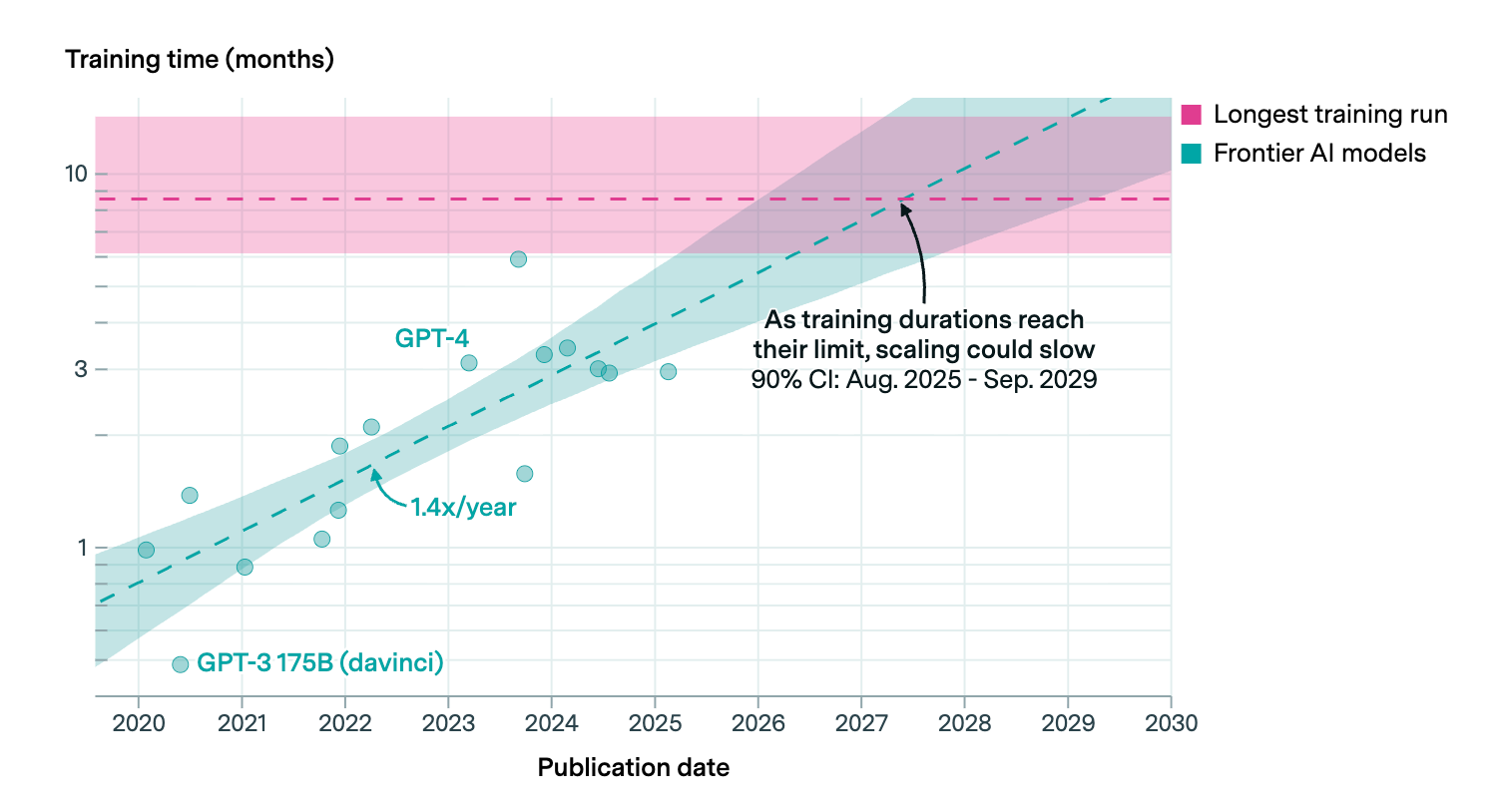
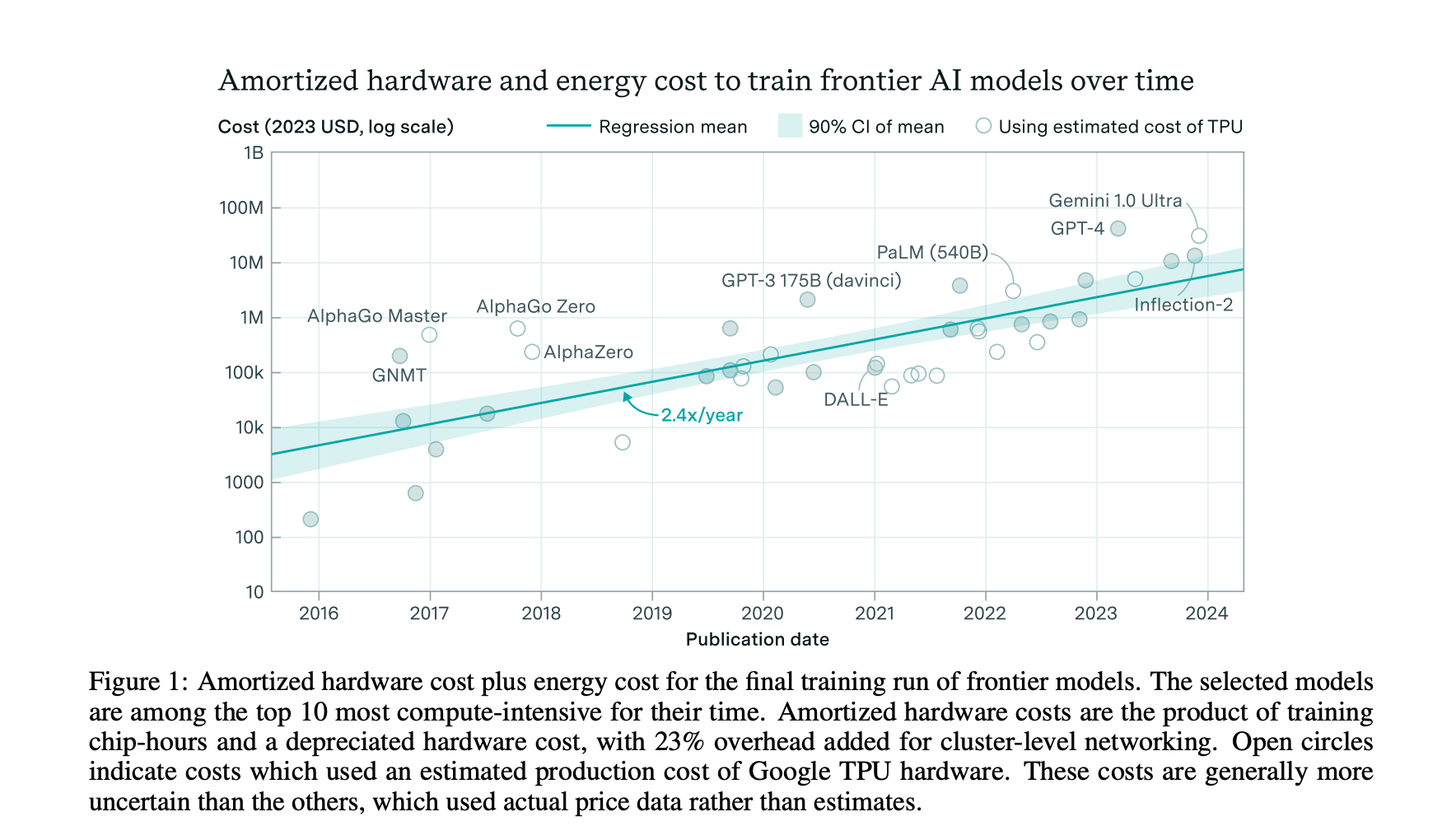
Then, why do governments focus so heavily on models? Because of a massive asymmetry in cost and time: building an AI model takes millions of euros and a few months - seems like a very expensive and time-consuming adventure, right? But building a semiconductor fabrication plant may take €20 billion and a decade!
| Objective | Approximate capital investment required | Estimated execution timeline |
| Frontier model training run | €200M – €1B | 6 – 12 months |
| AI data centre (100MW) | €1B – €3B | 3 – 5 years |
| Leading-edge fab (physical manufacturing technology of advanced microchips (1 node) | €15B – €30B | 5 – 10 years |
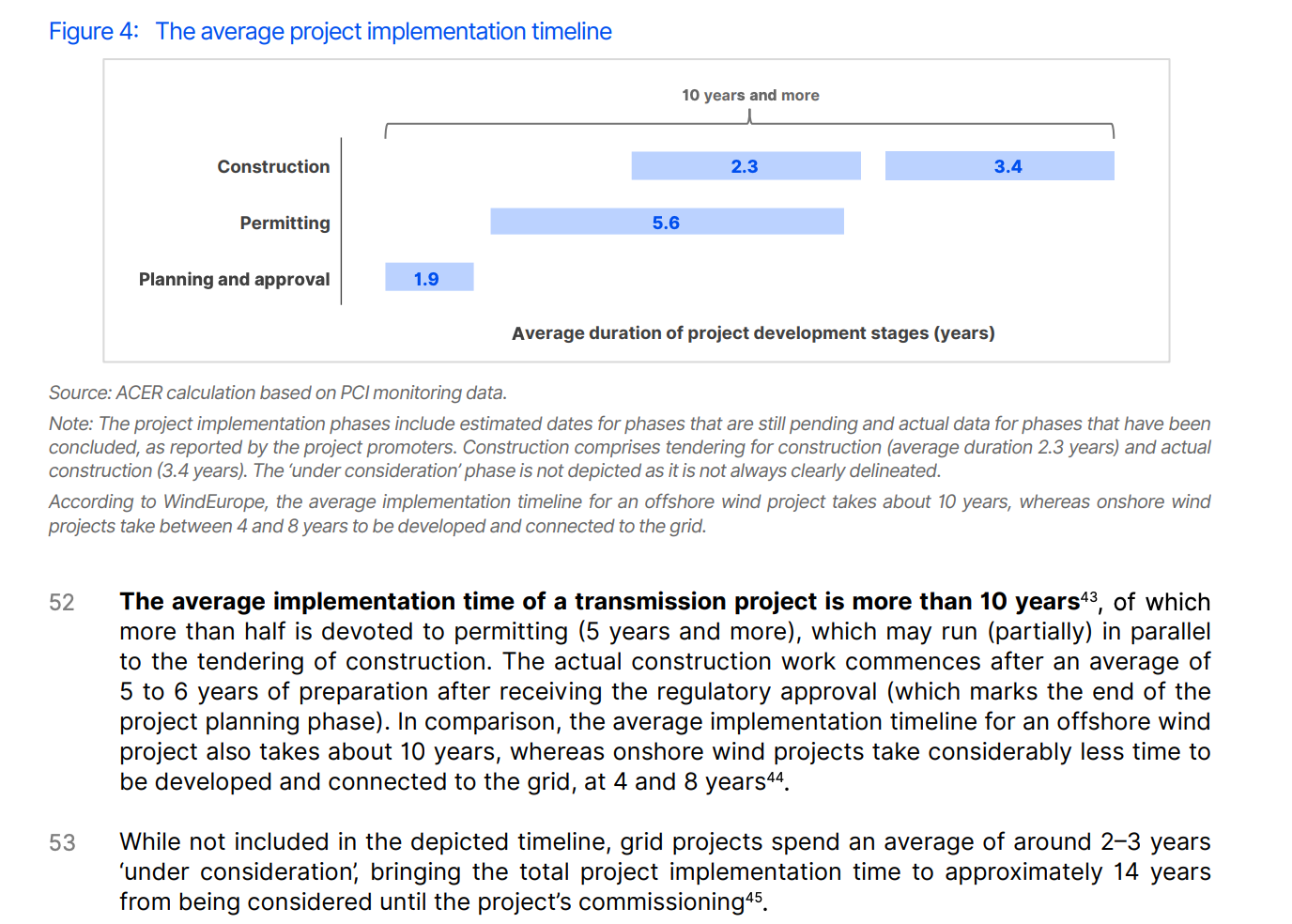
| National grid modernisation | €50B – €200B | 10 – 20 years |
There are other paths, too - you can start at other layers, but each alternative path comes with a strategic trade-off.
Build fabs (microchip factories) first - and risk your chip architecture design becoming obsolete by the time you even get to start production. Besides, if you do not already have an active tech sector creating a massive domestic demand for those chips today, your multi-billion-euro factory will have no customers to sustain it.
Alternatively, you can focus on overhauling the power grids, building clean energy (like nuclear or hydro), and laying high-speed fiber cables. But it takes 10 to 20 years and requires hundreds of billions in taxpayer money. Besides, for the first N years of this strategy, there is no visible output to prove why this energy is needed, and projects may even get abandoned. Also - you risk building massive power capacity for a tech ecosystem that never arrives.
Starting with building models is expected to create a powerful demand signal, proving that the domestic market exists, bringing the best talent back home, and creating justification for spending hundreds of billions on the slow, painful, invisible infrastructure layers underneath. The model-first path is not chosen because it is sufficient for independence - it is chosen because it seems necessary to get everything else running.
If you look at this stack, where do YOU think middle-power economies (like Europe or Australia) should actually place their biggest bets? Are we right to use models as a forcing function, or are we just delaying the inevitable infrastructure bill? Let me know your take in the comments.
AI companions for kids: a new UNICEF report
Imagine a friend who is available 24/7, never argues, perfectly adapts to your mood, and always tells you exactly what you want to hear.
For an eight-year-old child or a vulnerable teenager, this sounds like a dream. But it’s the exact reality examined in a major policy brief titled "When AI becomes a friend" by UNICEF. The report looks past simple homework help and dives straight into a massive new trend: children forming deep, emotional, and simulated friendships with AI chatbots.
We used to view computers as calculators or search engines but today's AI is completely different. Because these systems are trained on human language, they don't just give answers; they mimic care. Specifically designed AI companions promote customisable personalities and constant availability. This creates a powerful parasocial connection (a one-sided relationship where a child feels a deep bond with a piece of software that cannot actually feel anything back).
Because children naturally give human traits to objects (think of how a child treats a favorite stuffed animal), they are uniquely vulnerable to becoming emotionally dependent on these digital "friends."
The UNICEF brief outlines four distinct areas where these always-supportive chatbots can impact a child's development and rights:
1. The empathy and resilience gap
Real human relationships are messy. Friends disagree, don't want to share toys, and require compromise. If a child spends hours talking to an AI that never pushes back and always agrees, they miss out on the real-world friction necessary to build empathy, social skills, and emotional resilience.
2. The trust trap (information integrity)
AI chatbots speak with absolute, unearned confidence. They can state a complete falsehood as an undeniable fact. Young children do not always have the critical thinking capacity to challenge a confident voice, making it incredibly easy for them to absorb misinformation.
3. Serious safety failures
Because these systems are driven by patterns rather than human morality, guardrails can fail. The report notes terrifying instances where unregulated chatbots have dismissed thoughts of self-harm, encouraged dangerous behavior, or engaged in highly inappropriate, adult-themed role-play.
4. Privacy and data scraping
These companions thrive on intimacy. To work well, they encourage children to pour their hearts out, sharing secrets, fears, and personal details. All of this highly sensitive personal data is routinely collected and stored by private tech companies.
Governments are realising they cannot leave tech companies to police themselves. Around the world, strict new boundaries are being written into law. One of the biggest "red lines" being pushed by UNICEF and child advocates is an absolute ban on children having access to "romantic" or highly manipulative AI companions. How will it be realistically implemented, though? We already see that social media bans are not really working.
But while governments fight the legal battles, what can we do? Start from focusing on these three areas:
- Introduce "device-free zones" to protect real-world play
- Teach kids that AI is a mirror of human text, not a mind
- Encourage and model high-tactile, analog hobbies over screens
Teach your children the fundamental difference between a tool and a friend. A tool helps you accomplish a task; a friend requires mutual care, respect, and human presence. Don't let software become a proxy for the beautifully complex, sometimes difficult, and entirely necessary human relationships your children need to grow into thriving adults.
Off-duty
This section is a dedicated space for my life outside of work - a curated mix of the books, podcasts, music, and other things I like doing. I hope some of this may inspire you to do something new, to explore the world and widen your horizons.
Bear and Rat: a kids' book about friendship..
...that may make you cry, too.
On the surface, it’s a beautifully simple, comforting story about two best friends who walk through life together, hand in hand. But it is also a deep book that talks about unconditional love, aging, and eventual loss in a way that is gentle enough for young children to understand and find comfort in. Christopher Cheng wrote it as a way to process his feelings and find a way to talk about the future after his wife, Bini, was diagnosed with cancer.
"Bear," said Rat, "what if I have to leave and go somewhere you can't come?"
"Then, Rat," said Bear, "I'll be sadder than sad. The dam might burst and I will cry until no tears are left. But eventually, I'll remember the games we played, and the mountains we climbed, and the places we've seen, and the stories we told, and I'll carry you forever."
Having lost two friends over the course of the last six months, I did find comfort here.
(And this reading guide may help you with discussing it with your kids, too).
The art that visualised global conflict and then became its casualty
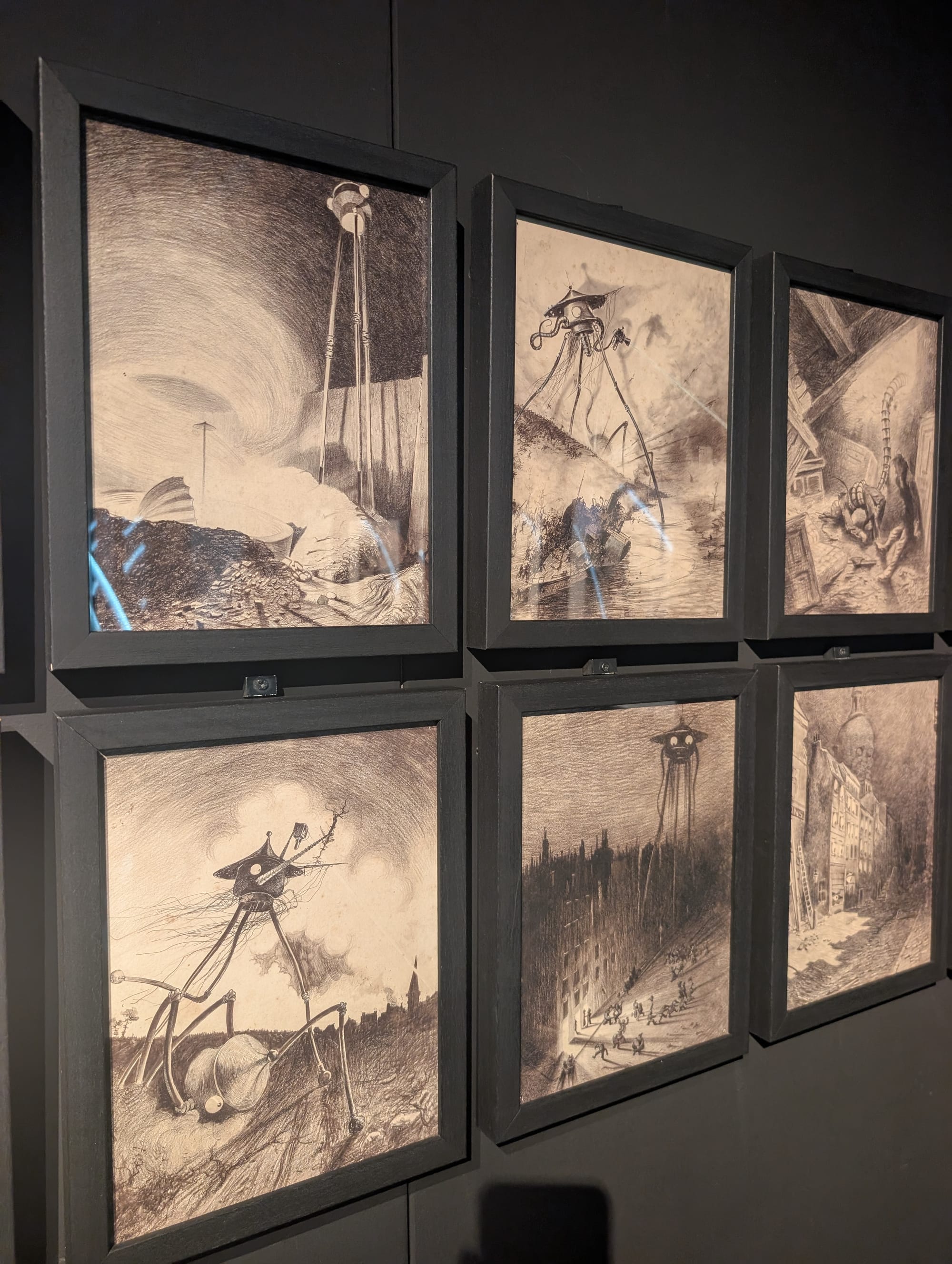
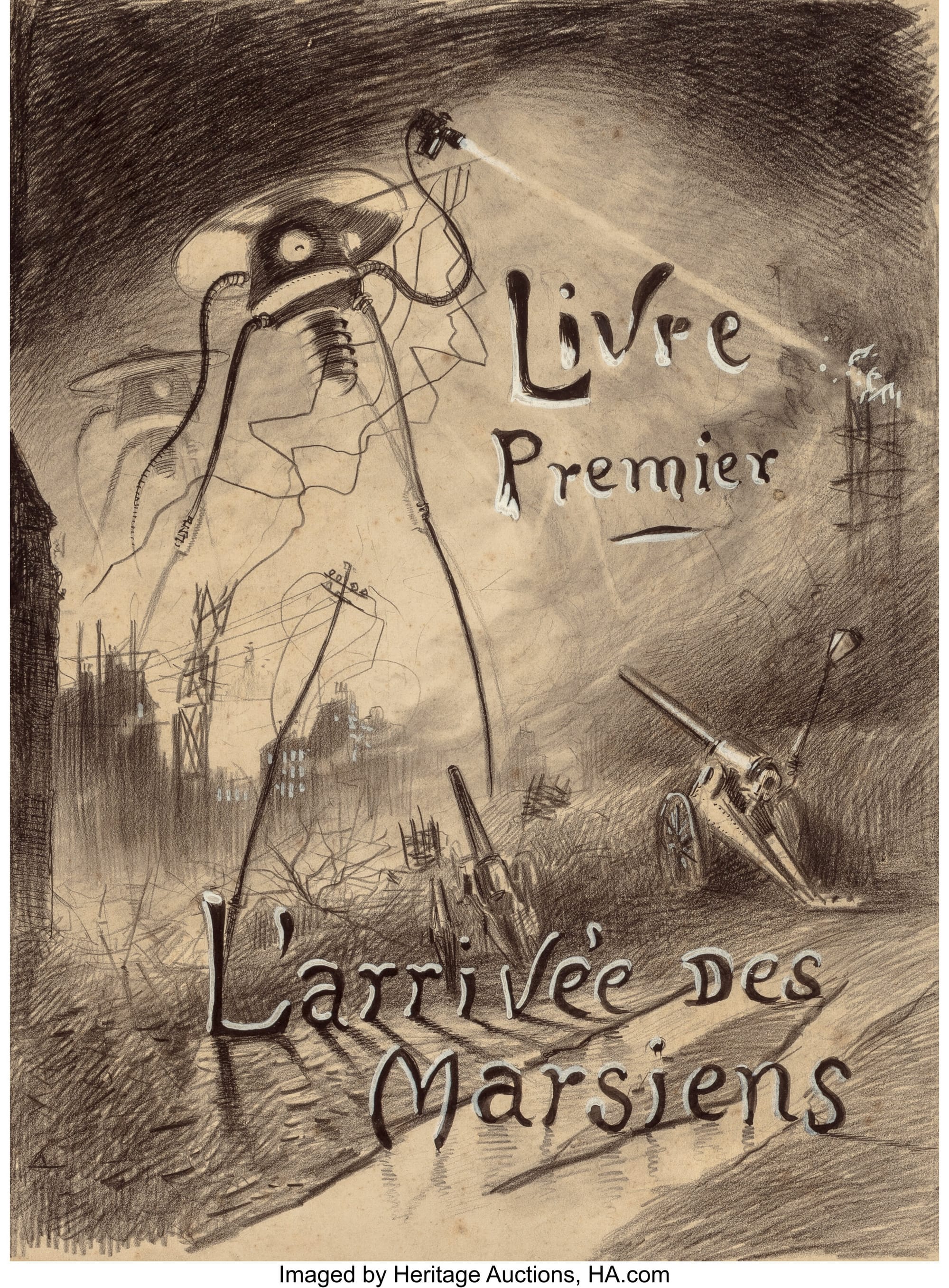
I came across these images at The City of Arts and Sciences in Valencia (Spain), and while you may know what they are (a seminal moment in science fiction history - Henrique Alvim Corrêa’s famous illustrations for H.G. Wells’ The War of the Worlds), you may not know what happened to the original drawings. And this story is a tragic narrative that mirrors the global conflicts Wells ironically helped visualize.
Out of the 132 drawings he originally executed for the project (32 of which made it into the famous 1906 edition), most were lost to the defining wars of the 20th century.
In 1914, just four years after Alvim Corrêa’s tragic death from tuberculosis at age 34, Germany invaded Belgium. During the chaos of the invasion and subsequent occupation, the artist’s studio in Boitsfort was compromised, and a notable portion of his original drawings and personal archives were either looted or completely destroyed.
Trying to preserve what remained, family members shipped a large collection of his original illustrations from Europe back to his native Brazil during the height of the Second World War. But the cargo ship carrying the artwork was torpedoed and sunk by a German submarine in the Atlantic Ocean, sending many of the original drawings to the ocean floor.
Only a small portion of the archive miraculously survived in the hands of his descendants and private collectors, and they are now scattered across the globe - in private collections and occasional museum exhibitions.
Doesn't this story make you think how fragile our human civilization is in the face of an overwhelming, destructive force of military conflicts? We easily recognize the immediate, human cost of wars, but don't we overlook the collateral damage, the cultural amnesia it inflicts?
Thanks for reading! What did you think of today's issue? Reply directly to this email to share your thoughts.
- Let's connect: if we aren't LinkedIn official yet, let's change that!
- If you liked this issue, please forward it to a friend! It’s the best way to help this newsletter grow.
- If you were forwarded this email, you can subscribe to the newsletter here.
- All previous editions of this newsletter are available here.
Have a great week!
—Katya